


Handmade vs. Industrial Ceramics: What to Choose for Your Home?
In the vast world of ceramics, the choice between handcrafted pieces and industrial productions represents a dilemma many face when furnishing or renovating their homes. Ceramics, a millennial art rooted in human history, continues to be a fundamental element in home furnishing and decoration. In particular, the ceramic tradition of Caltagirone represents an Italian excellence recognized worldwide for its extraordinary artistic and artisanal quality.
The Historical Roots of Caltagirone Ceramics
Caltagirone ceramics boast a thousand-year tradition dating back to the Arab domination of Sicily. This noble art has evolved over time, maintaining the traditional manufacturing techniques that still characterize the most precious artifacts today. The artisans of Caltagirone have managed to preserve the authenticity of their creations, skillfully combining tradition and innovation.
The Production Process: Two Worlds Compared
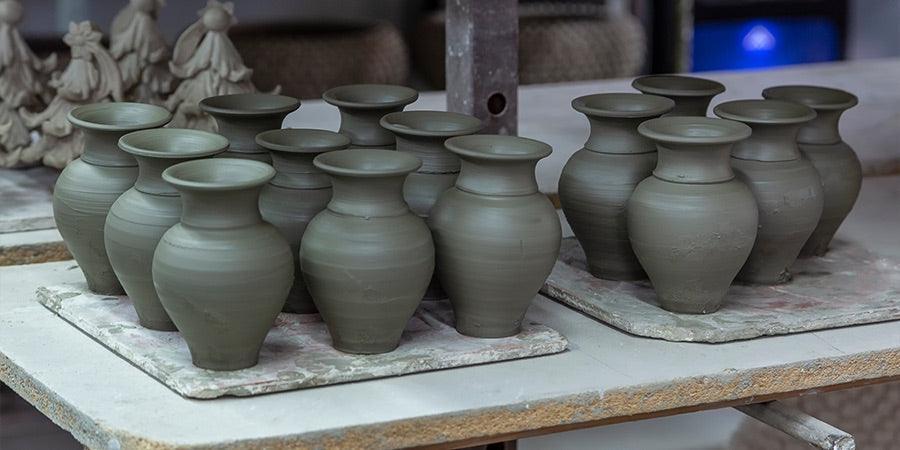
The fundamental difference between handcrafted and industrial ceramics lies in the production process. While the former are shaped by the expert hands of artisans, who dedicate time and attention to each individual piece, the latter are the result of automated processes that guarantee standardized large-scale production.
Artisanal Production
In the artisan workshop, every stage of processing is carried out manually: from the selection of clay to modeling, from decoration to firing. This process requires skill, patience, and a deep knowledge of materials. Each piece tells a unique story and carries with it small imperfections that attest to its authenticity.
an example of artisanal processing of a Sicilian pine cone.
Industrial Production
In the industrial context, sophisticated machinery and automated production lines ensure rapid and efficient production. Standardization ensures uniformity and precision but sacrifices the uniqueness that characterizes artisanal pieces.
[[pigne]]
Advantages of Handmade Ceramics
Handmade ceramics offer numerous advantages that make them particularly appreciated:
-
Uniqueness: Each piece is the result of the artisan's creativity and skill, making each object unrepeatable. The natural imperfections of handmade work add charm and character, distinguishing it from industrial products.
-
Customization: Artisans can adapt shapes, colors, and decorations to the specific needs of the client. This allows for the creation of custom objects that reflect personal taste and integrate perfectly into the desired environments.
-
Superior quality of materials used: Artisans carefully select high-quality materials, often local, ensuring durability and resistance over time. Manual processing allows for detailed control over every stage of production.
-
Artistic and cultural value: Handcrafted ceramics tell stories and traditions, often rooted in local culture. Purchasing a handcrafted piece means bringing home a fragment of history and celebrating artistic heritage.
-
Environmental sustainability: Artisan production tends to be less environmentally impactful than industrial production. Artisans use traditional techniques that reduce waste and energy consumption, promoting a more responsible approach.
-
Support for the local economy: Investing in handcrafted ceramics means supporting small producers and local communities. This fosters the economic growth of the territory and preserves traditional crafts that risk disappearing.
-
Durability: Thanks to the quality of materials and careful workmanship, handcrafted ceramics are often more resistant than industrial products, reducing the need for frequent replacements.
- Unique Aesthetics: Handcrafted ceramics stand out for their original design and ability to create welcoming and refined atmospheres. They are perfect for enriching any space with a touch of elegance.

Advantages of Industrial Ceramics
Industrial ceramics, produced on a large scale, offer a series of advantages that make them a practical and convenient choice for many needs:
-
More accessible prices: Thanks to automated production and high volumes, production costs are reduced, allowing products to be offered at competitive prices. This makes them ideal for those seeking economical solutions without sacrificing functionality.
-
Greater immediate availability: Large-scale production ensures a wide availability of products ready for purchase. Waiting times are minimized, making industrial ceramics perfect for projects that require speed.
-
Aesthetic uniformity: Mechanized processing ensures precision and aesthetic consistency between pieces. This feature is particularly useful in contexts that require a homogeneous appearance, such as flooring or large surface coverings.
-
Standardized resistance: Industrial processes ensure uniform technical properties, such as resistance to impact, abrasion, and chemical agents. This makes industrial ceramics suitable for high-intensity use contexts, such as public and commercial spaces.
-
Wide range of formats and sizes: Industrial production offers a vast variety of options in terms of dimensions, thicknesses, and finishes. This versatility allows for satisfying different needs, adapting to architectural and decorative projects of all types.
-
Ease of replacement: Product standardization makes it simple to find identical pieces to replace damaged or worn-out ones over time. This reduces the costs and complexity of repairs or maintenance.
-
Technological innovation: Industrial ceramics often incorporate advanced technologies, such as anti-scratch, anti-stain, or antibacterial treatments. These improvements add functional value to products, making them more performant in specific environments.
- Stylistic versatility: Despite automated production, industrial ceramics offer a wide variety of designs and finishes, including effects that simulate natural materials like wood or stone. This allows for adaptation to different aesthetic preferences.

Thanks to these advantages, industrial ceramics represent a practical and economical solution for those seeking reliable and functional products without sacrificing a wide range of aesthetic and technical possibilities.
How to choose the best solution
The choice between handcrafted and industrial ceramics depends on a series of factors that must be carefully evaluated to ensure the product fully meets aesthetic, functional, and economic needs. Here is an expansion of the main aspects to consider:
Available budget
Budget is often the first element to consider. Handcrafted ceramics tend to have a higher cost, justified by the quality of materials, manual labor, and the uniqueness of the product. They are ideal for those who wish to invest in exclusive and durable pieces. Conversely, industrial ceramics offer more economical solutions, perfect for projects that require large quantities of material or that must adhere to spending limits.
Intended use
The intended use plays a crucial role in the choice. For spaces that require resistance and uniformity, such as flooring in commercial areas or high-traffic bathrooms, industrial ceramics are often the best choice due to their standardized technical characteristics. Handcrafted ceramics, on the other hand, are ideal for environments where aesthetics and artistic value are paramount, such as living rooms, kitchens, or exhibition spaces.

Environmental style
The style of the environment is another determining factor. If you want to create a unique and refined atmosphere, handcrafted ceramics offer an infinite variety of personalized designs and artistic details. For modern and minimalist environments, industrial ceramics can provide clean and uniform finishes that integrate perfectly with contemporary lines.
Production times
Timelines can significantly influence the choice. Handcrafted ceramics require longer production times due to manual processing and customization. If the project has tight deadlines, industrial ceramics represent a quicker solution thanks to their immediate availability.
Customization needs
If you want a unique and tailor-made product, handcrafted ceramics are unbeatable. Artisans can adapt shape, colors, and decorations to the client's specific requests. Industrial ceramics offer less flexibility in this regard but compensate with a wide range of predefined options that can satisfy multiple tastes.
[[teste]]
Conclusions
Both handcrafted and industrial ceramics have their place in the contemporary market. The choice will depend on specific needs and personal preferences. For those seeking unique pieces of great artistic value, Caltagirone handcrafted ceramics are undoubtedly the ideal choice.
Discover our collection of handcrafted ceramics on ceramichesofia.it, where tradition and innovation merge to create unique pieces that will enrich your home with authenticity and style.
FAQ
- How long does it take to make a handcrafted ceramic piece? The creation of a handcrafted piece can take from a few days to several weeks, depending on the complexity of the work.
- Are handcrafted ceramics more delicate than industrial ones? Not necessarily. The quality of the materials and the care in craftsmanship can make handcrafted ceramics equally resistant.
- Is it possible to customize a handcrafted ceramic piece? Yes, artisans can create custom pieces according to the client's specific requests.
- How can you recognize an authentic handcrafted ceramic piece? Handcrafted ceramics show small variations that attest to their uniqueness and are often signed by the artisan.
- Can industrial ceramics imitate handcrafted ones? Despite technological advancements, industrial ceramics cannot fully replicate the unique character of handcrafted pieces.




Leave a comment
All comments are moderated before being published.
This site is protected by hCaptcha and the hCaptcha Privacy Policy and Terms of Service apply.