


Introduction
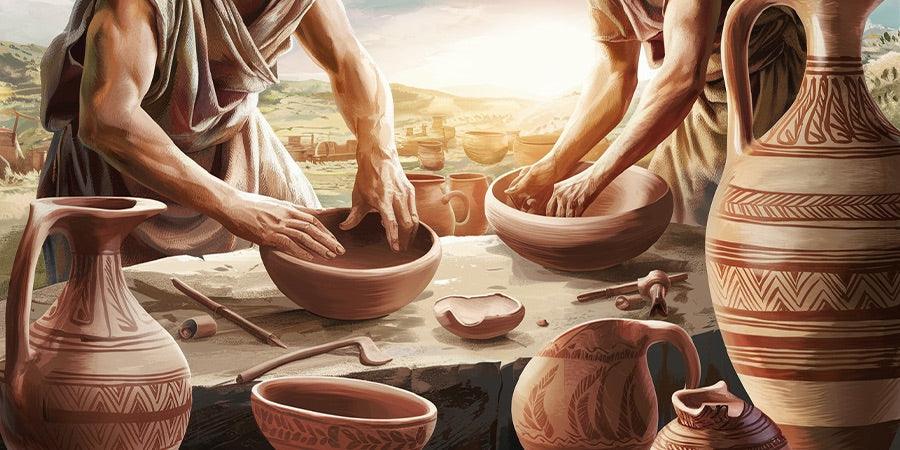
The art of Caltagirone ceramics represents one of the most extraordinary expressions of Sicilian craftsmanship, rooted in a millenary tradition that has spanned eras and dominations, shaping the city's culture and identity. Known as the "City of Ceramics," Caltagirone is a place where artisan mastery blends with history, producing unique works appreciated worldwide.
The Origins of Sicilian Ceramics
Sicilian ceramics have their roots in antiquity, when the first Mediterranean civilizations began to shape clay for functional and decorative purposes. Every culture that passed through Sicily left its mark on ceramic production, giving rise to a rich and stratified style.
The Sicilian word “a crita” and the roots of the island of Crete
The Sicilian term “a crita,” meaning clay, underscores the importance of this material in the island's culture. Some historians believe that the art of Sicilian ceramics may have ties to the island of Crete, a center of the Minoan civilization, where clay processing was already a consolidated art. This connection testifies to the antiquity of Mediterranean influences on Sicilian ceramics.

Cilindrone in turquoise monochrome with profiles of a lady and reverse decorated with large crumpled leaves - Caltagirone workshop from the first half of the 16th century - Romano Collection, Palermo - H 34 cm
Ancient Origins of Caltagirone Ceramics
The origins of Caltagirone ceramics date back to prehistory, when the first human settlements in Sicily began to shape clay to create tools and decorations. The very name of the city derives from the Arabic "Qal’at al Ghiran," meaning "Rock of Vases." During the Neolithic period, Anatolian and Cypriot influences contributed to the spread of advanced techniques in clay processing.
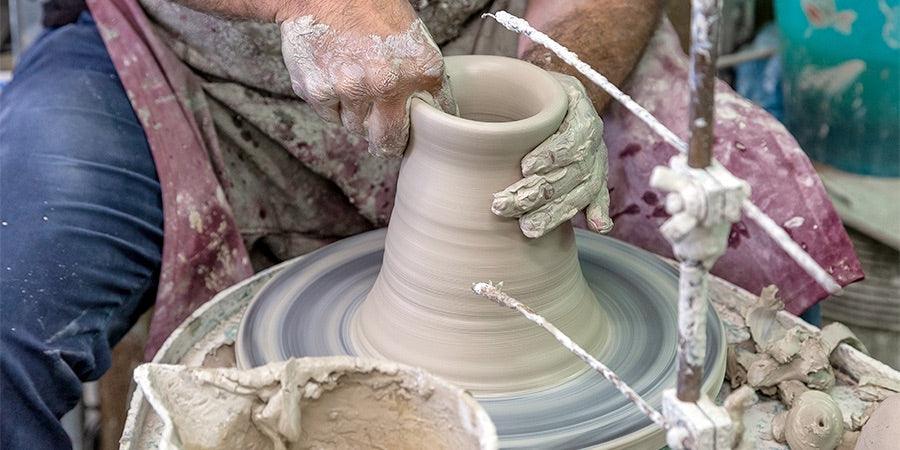
As early as the 7th millennium BC, artifacts found in the Neolithic villages of Scala, Pille, and S. Ippolito attest to the presence of ceramics with geometric decorations and vibrant colors. The introduction of the potter's wheel by the Cretans, around 1000 BC, marked a significant turning point, improving the precision and efficiency of ceramic production.
[[pigne]]
Arab Influence and Medieval Development
With the arrival of the Arabs in Sicily in the 9th century, the art of ceramics underwent a true revolution. Arab artisans introduced glazing, a technique that involved covering the surface of ceramics with a layer of glassy enamel, making them impermeable and shiny. This innovation forever changed the way ceramics were conceived and produced on the island.
Glazed ceramics were not only durable but also aesthetically captivating. Their brilliant colors and complex decorations lent themselves to being used in both everyday contexts and noble settings. Glazed plates, amphorae, and tiles adorned mosques, palaces, and gardens, demonstrating how art could merge with functionality.
The Greeks and the Art of Shaping
Greek influence, dating back to the colonization of the 7th century BC, brought advanced modeling and decoration techniques to the island. The Greeks introduced the use of the potter's wheel, which allowed for the creation of symmetrical and harmonious objects. The decorations, often inspired by mythological or naturalistic themes, added a touch of elegance to the ceramics.
Evolution between the Middle Ages and the Renaissance
During the Norman and Swabian periods (11th-13th century), Caltagirone's ceramic production continued to flourish, enriched with decorations inspired by Islamic art. In the Aragonese and then Renaissance periods, Caltagirone ceramics became increasingly refined: geometric and floral motifs spread, with colors such as cobalt blue and copper green, inspired by Spanish majolica.
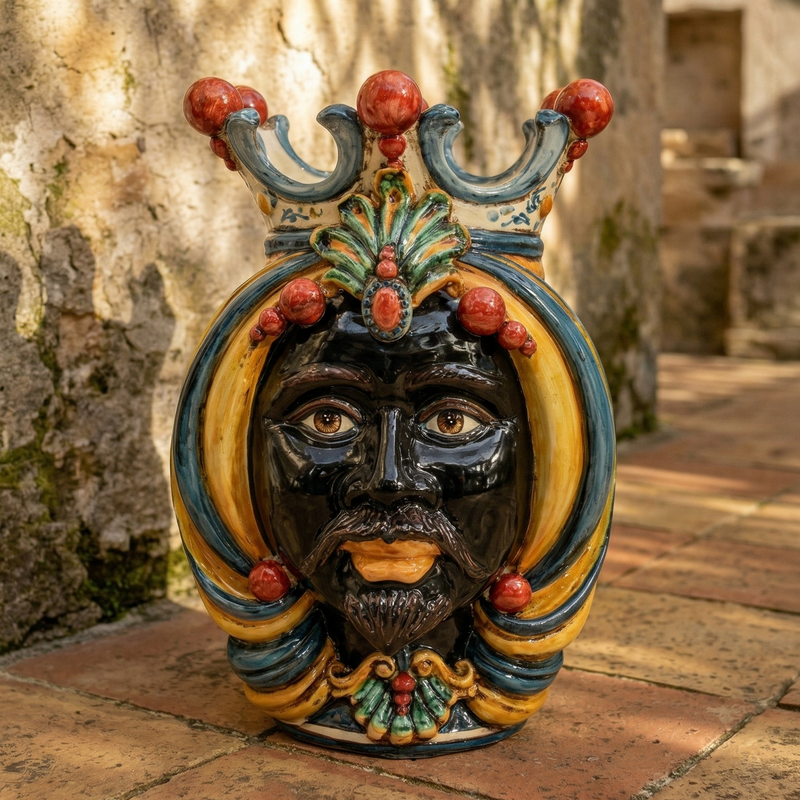
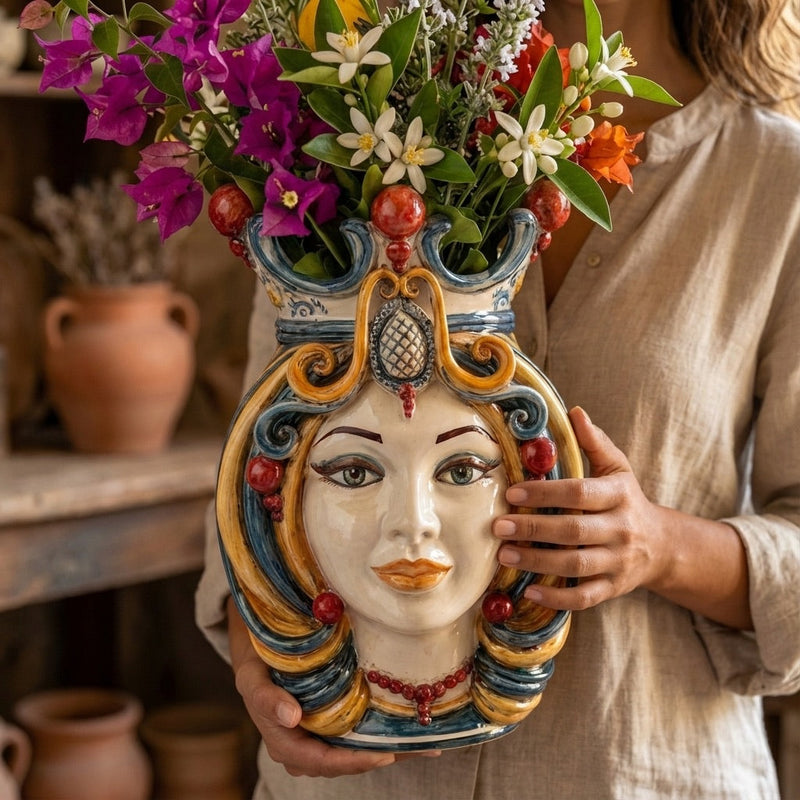
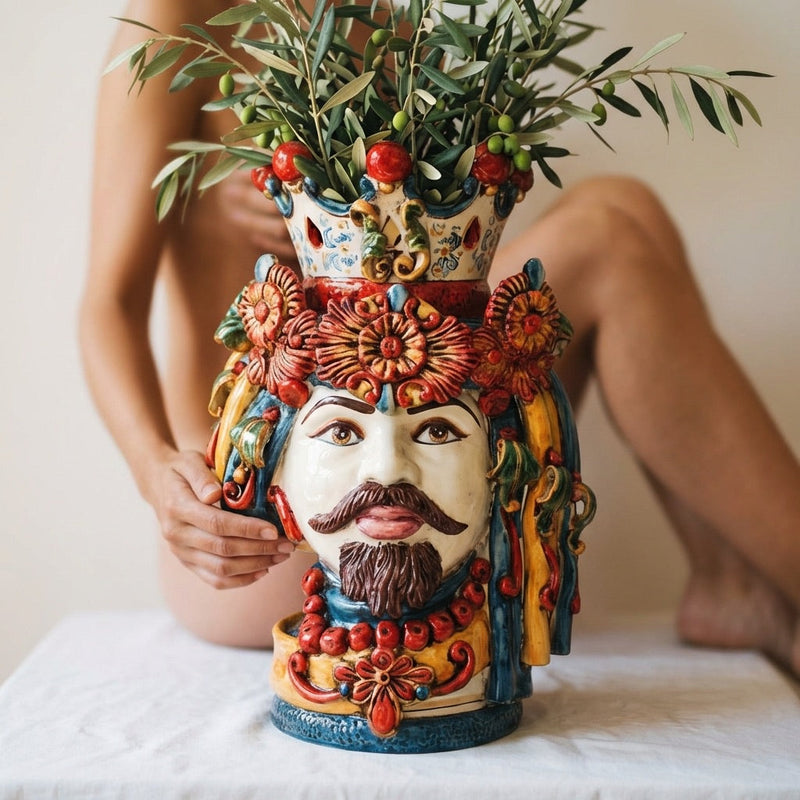
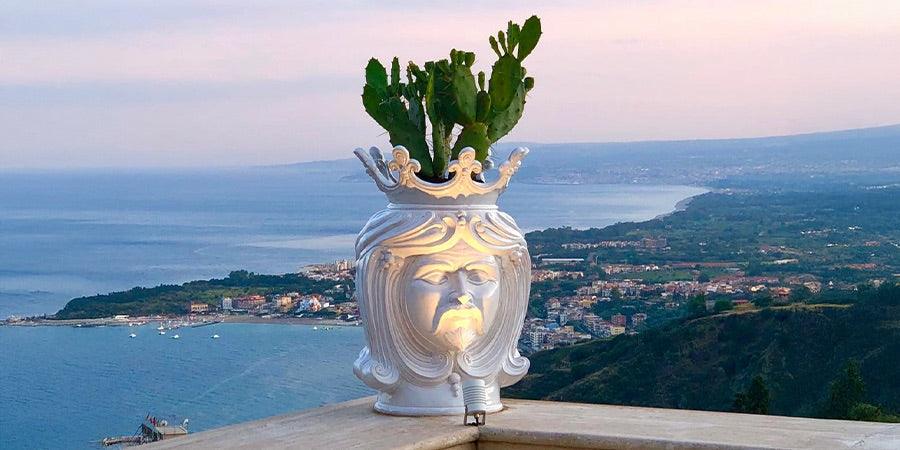
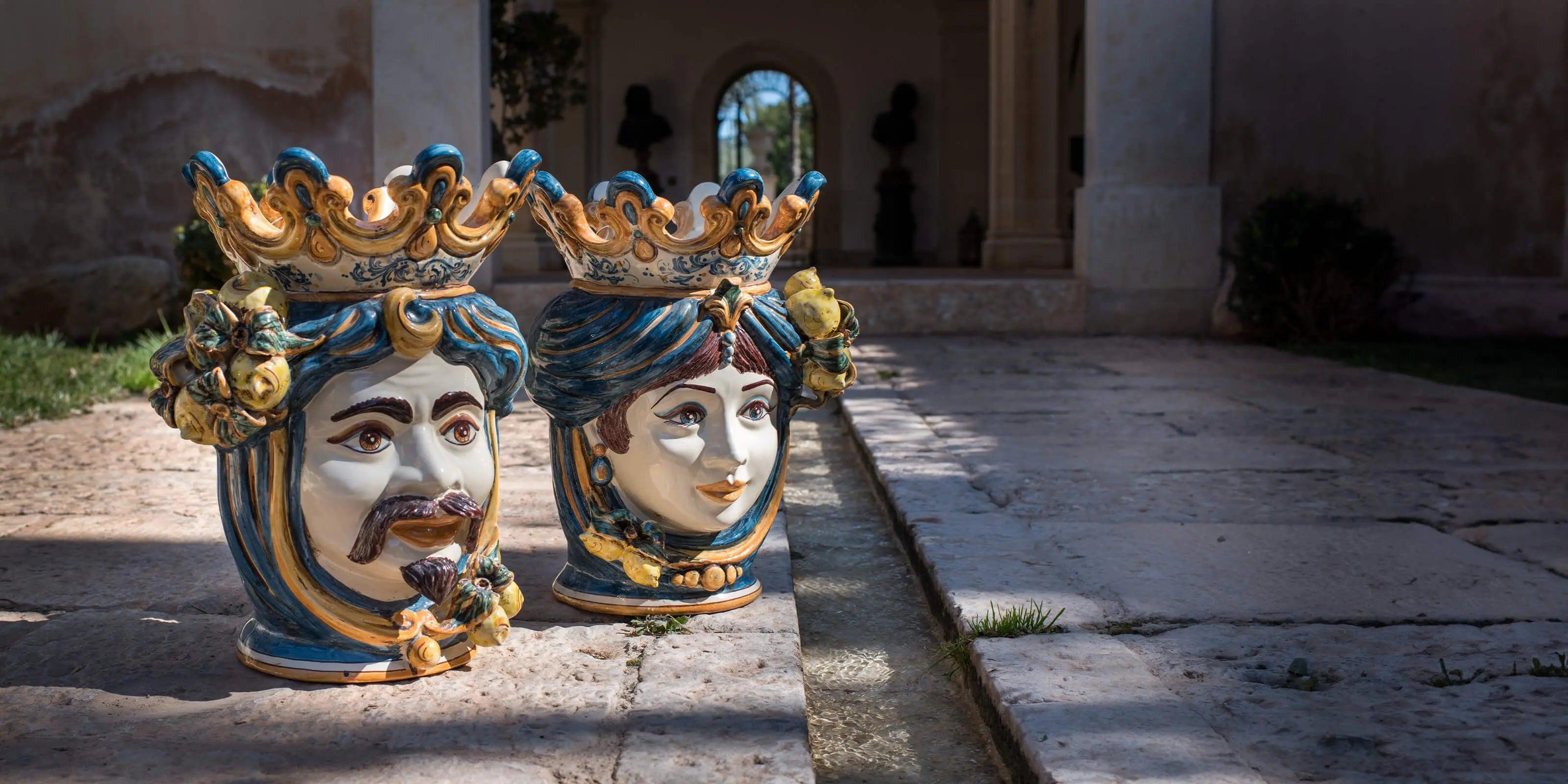
In the 17th and 18th centuries, Caltagirone ceramics reached their peak with the production of Baroque majolica, characterized by embossed ornaments and anthropomorphic figures, still a symbol of local craftsmanship today.

Caltagirone workshops: a center of excellence
Origins and initial prosperity
Historical and cultural development

Amorous albarello in turquoise monochrome with confronting profiles and reverse decorated with fragmented foliage branches - Caltagirone workshop from the early 16th century - Regional Gallery of Sicily, Palermo N°5552 - H 30 cm
Economic and social impact
Challenges and changes
Cultural legacy
From Tradition to Innovation: Ceramiche SOFIA
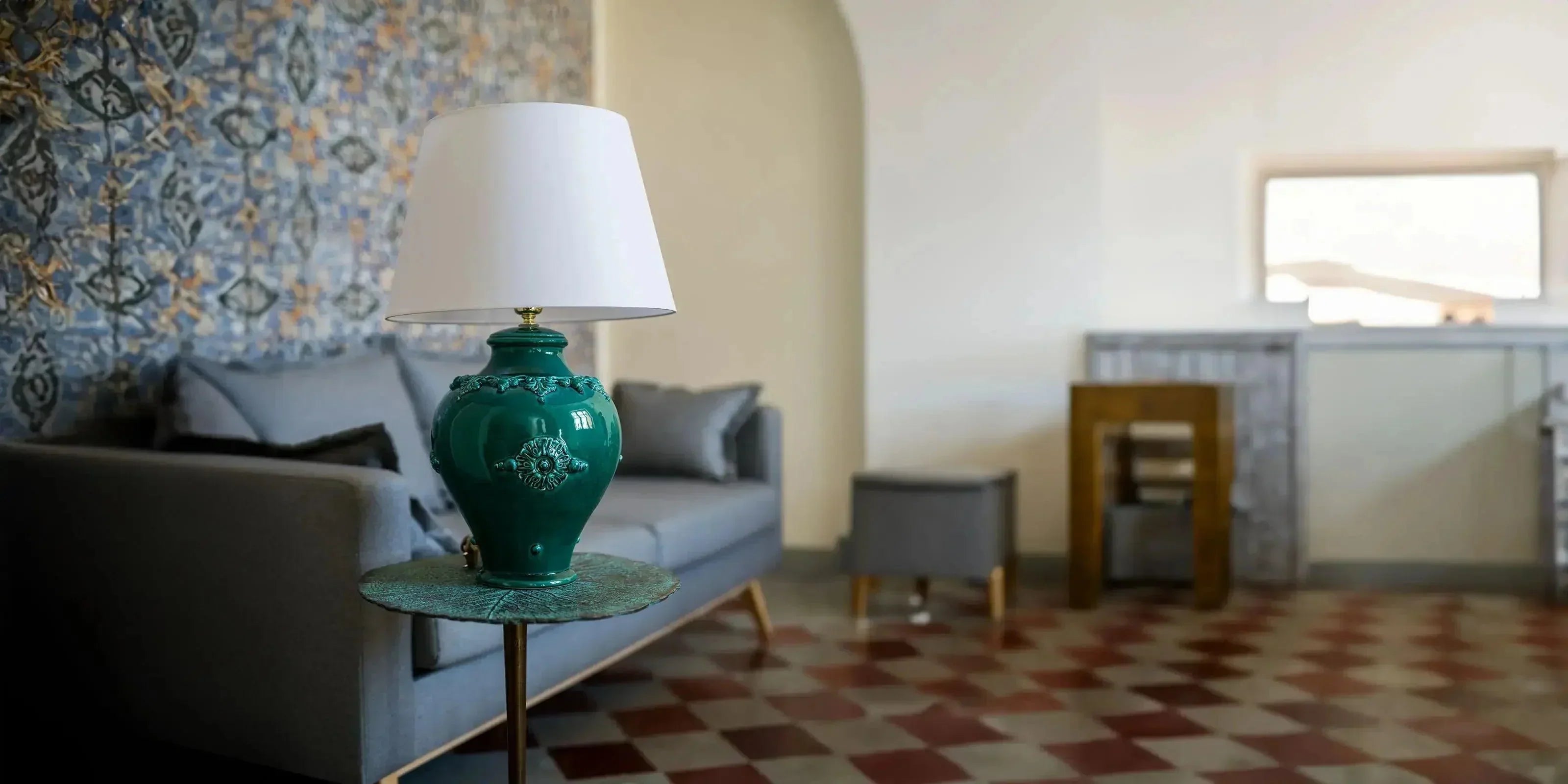
In the panorama of Caltagirone ceramics, Ceramiche SOFIA (ceramichesofia.it) plays a prominent role. This company stands out for its ability to combine artisanal techniques handed down through generations with technological and design innovations. Every piece produced by Ceramiche SOFIA is an example of how tradition can evolve without losing its authenticity.

Modern technologies and respect for the ancient
Ceramiche SOFIA keeps ancient techniques alive, such as hand-crafting and firing in traditional kilns, but also integrates modern tools to perfect details and optimize production processes. This combination ensures quality and durability without sacrificing the classic aesthetic of Sicilian ceramics.
Sustainability at the core
Ceramiche SOFIA places great emphasis on sustainability, using eco-friendly materials and low-environmental-impact production processes. This choice not only meets contemporary needs but also represents a return to origins, when the art of ceramics was deeply connected to nature.

Conclusion: Timeless Art
Sicilian ceramics are witnesses to a millenary history and symbols of a culture that has been able to reinvent itself over time. Thanks to companies like Ceramiche SOFIA, this tradition not only survives but continues to evolve, fascinating new generations and adapting to modern contexts.
The art of Caltagirone ceramics is not just a legacy of the past, but a continuous source of inspiration for the future. To discover more, visit the official website: ceramichesofia.it.
Sources: Semantic Scholar and Rectoverso La Maiolica Siciliana (Altamura Editrice)

Leave a comment
All comments are moderated before being published.
This site is protected by hCaptcha and the hCaptcha Privacy Policy and Terms of Service apply.