


Introduction to the Allure of Artistic Ceramics
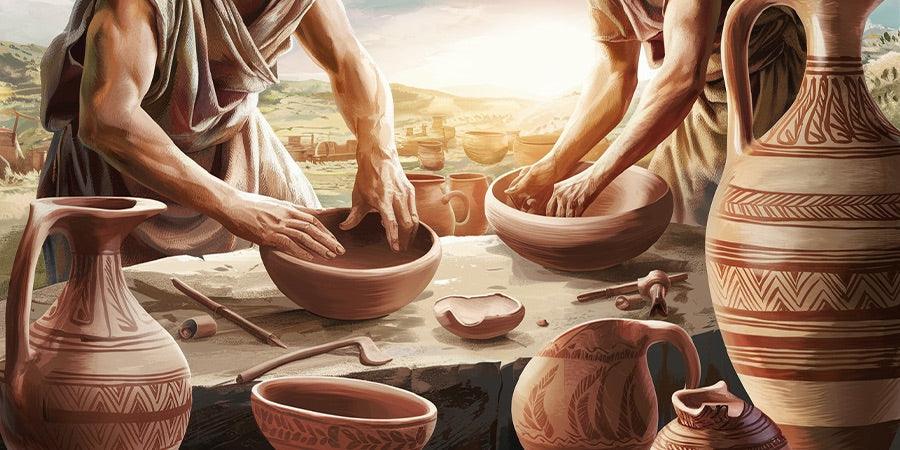
Artistic ceramics represent one of the oldest forms of craftsmanship, capable of transforming natural materials into unique and timeless works of art. Behind every vase, plate, or sculpture lies a long and fascinating creation process, handed down through centuries with passion and skill. In this article, we will explore the fundamental stages of ceramic production, with a focus on Sicilian artisanal traditions, particularly those of Caltagirone, a city emblematic of Italian majolica.
The Value of Craftsmanship and Tradition
Unlike industrial production, artisanal ceramics are distinguished by attention to detail and the personalization of each piece. Every object is the result of expert hands, capable of shaping clay into harmonious forms and embellishing it with colors and decorations that tell the story and identity of a region. This added value makes handmade creations authentic, unique, and full of meaning.

Raw Materials: Clay and Natural Materials
The quality of ceramics largely depends on the raw materials used. Clay, an essential element of the process, must possess specific characteristics of plasticity and resistance. In Caltagirone, ceramic production originated precisely from the presence of rich clay quarries in the nearby Santo Pietro area, from which artisans still extract the perfect material to create durable and high-quality artifacts.
In addition to clay, another fundamental element is the fuel required for firing in kilns. Traditionally, Sicilian artisans used wood from local forests, which ensured a constant and uniform temperature during firing, essential for achieving the typical finish of majolica.
Stages of Artisanal Ceramic Processing
Creating a ceramic artifact requires a complex process that unfolds in several stages, each of which is fundamental to ensuring the quality and beauty of the final product. Caltagirone artisans still follow traditional methods, passed down from generation to generation, to obtain unique pieces that embody the soul of Sicily.
Throwing and Shaping
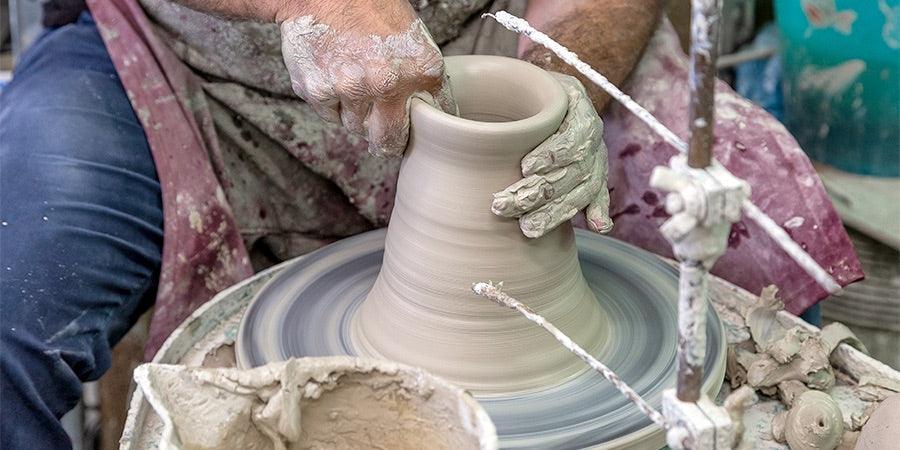
The first stage involves shaping the raw clay to give it the desired form. There are two main techniques for this step:
- Throwing: the clay is placed on a potter's wheel and manually shaped by the artisan, who precisely defines its form with skilled movements. This technique is used to create symmetrical objects such as vases, plates, and bowls.
- Manual Modeling: used for more complex sculptures and decorative objects, it involves the use of molds or direct hand-shaping to achieve unique and detailed forms.
Once shaped, the object is left to dry to remove excess moisture before moving on to the next stage.
Drying and First Firing (Bisque Firing)
Drying is a crucial step to ensure the object's strength. The artifact is left to dry slowly in a temperature-controlled environment, avoiding thermal shocks that could cause cracks or deformities.
After drying, the first firing takes place in kilns reaching temperatures of about 1000°C for approximately 13 hours. This process transforms the clay into a solid and porous material, called ceramic bisque, ready to be decorated and glazed.
Glazing and Decoration
After the first firing, the artifact moves to the glazing phase, during which a thin layer of white glaze made from oxides and kaolin is applied. This coating serves a dual purpose: it protects the ceramic and creates a smooth, uniform surface for decoration.
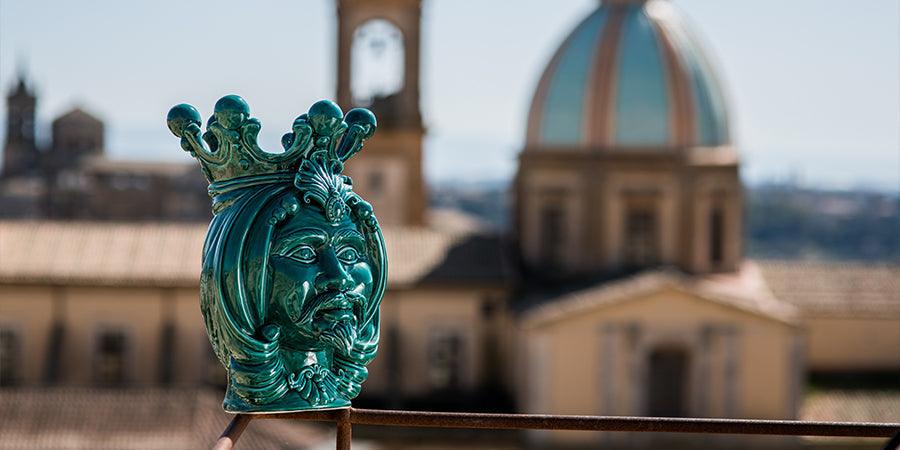
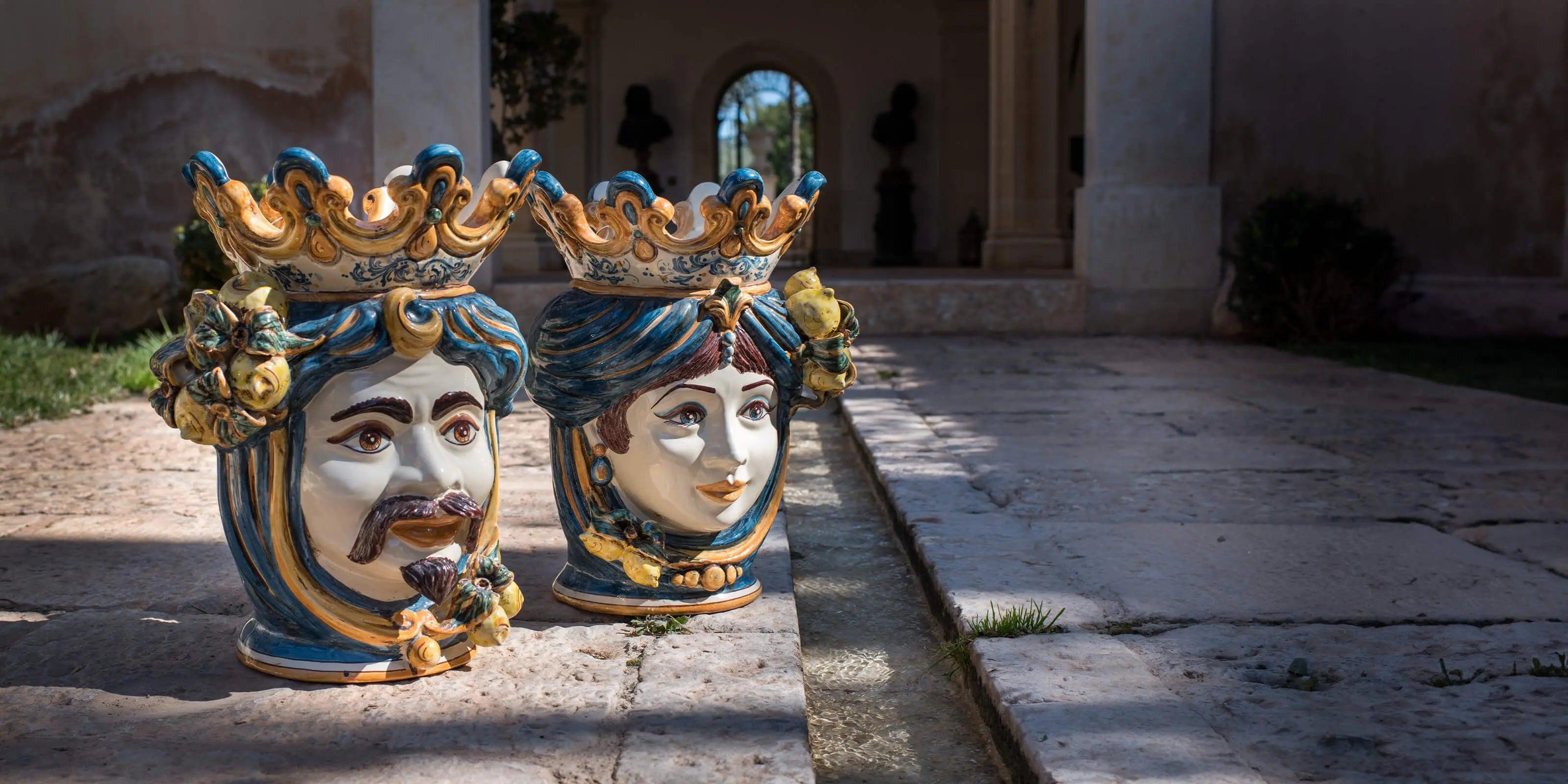
Once the glaze is dry, the object is ready to be hand-painted by the artisans. Decoration is one of the most artistic and distinctive phases of ceramic production, as each piece becomes a canvas on which the artist imprints motifs, colors, and symbols linked to local tradition. In Caltagirone, for example, floral motifs, Arabesque elements, and the famous faces of the Moorish Heads are often found, telling ancient stories and legends.
Second Firing and Finishing
After decoration, the ceramic undergoes a second firing in the kiln, which sets the colors and gives the surface its characteristic vitrified sheen. This firing occurs at high temperatures, often exceeding 900°C, and produces the typical brilliance of Sicilian majolica.
During this phase, artisans can apply specific aging and finishing techniques, inspired even by the chiaroscuro used by the great master Caravaggio. This chiaroscuro effect helps to enhance the three-dimensionality and depth of the decorations, making each piece even more evocative and refined.
Caltagirone Ceramics: A Sicilian Excellence
Caltagirone is universally recognized as the capital of Sicilian ceramics. Its creations are appreciated worldwide for the quality of craftsmanship, the richness of colors, and the beauty of details. This artistic and cultural heritage is the result of centuries of history and innovation, which have allowed local artisans to refine their techniques and create unique and inimitable artifacts.
Purchasing a Caltagirone ceramic means owning a piece of tradition, a work that embodies the passion, art, and know-how of a land rich in history.
Ceramiche Sofia: The Elegance of Tradition
Among the excellences of Caltagirone ceramic craftsmanship, Ceramiche Sofia stands out, a workshop specializing in the production of artistic majolica. Every piece created is the result of meticulous craftsmanship, combining traditional techniques with refined and original aesthetics.
The artisans of Ceramiche Sofia pay particular attention to the selection of raw materials, decoration, and firing, to ensure that each creation is unique, timeless, and authentically Sicilian. Their collections include vases, plates, home furnishings, and the iconic Moorish Heads, symbols of local culture.

Ceramiche Sofia Showroom in Caltagirone
For those wishing to admire these extraordinary works of art up close, Ceramiche Sofia has its showroom in the heart of Caltagirone, at Corso Principe Amedeo di Savoia 13. Here you can discover a wide selection of artifacts, learn about the history and crafting techniques, and choose a unique piece to enrich your home with the charm of Sicilian ceramics.
Visiting the showroom means immersing yourself in a world of colors, tradition, and passion, connecting with the most authentic soul of Caltagirone ceramic art.
Conclusion
Artisanal ceramics are much more than a simple artifact: they are the result of a long and fascinating process that transforms earth into timeless works of art. From the selection of clay to decoration, to the final firing, each stage contributes to making each piece unique and precious.
Purchasing a creation from Ceramiche Sofia means bringing home a piece of Sicily, made with passion, dedication, and respect for a tradition that continues to live and enchant.
FAQs
1. How long does it take to process a ceramic artifact?
The complete process, from modeling to final firing, can take several weeks, depending on the complexity of the piece and drying times.
2. Why is Caltagirone ceramics so famous?
Caltagirone is a ceramic production center with centuries of history, known for the quality of local clay, refined artisanal techniques, and richly detailed decorations.
3. What makes Ceramiche Sofia ceramics unique?
The use of high-quality materials, hand-painted decorations, and attention to detail ensure exclusive and timeless artifacts.
4. Where is Ceramiche Sofia's showroom located?
The showroom is located in Caltagirone, at Corso Principe Amedeo di Savoia 13.
5. Can I purchase Caltagirone ceramics online?
Many workshops offer online purchasing options, including Ceramiche Sofia, which allows you to receive authentic pieces directly at home.

Leave a comment
All comments are moderated before being published.
This site is protected by hCaptcha and the hCaptcha Privacy Policy and Terms of Service apply.