


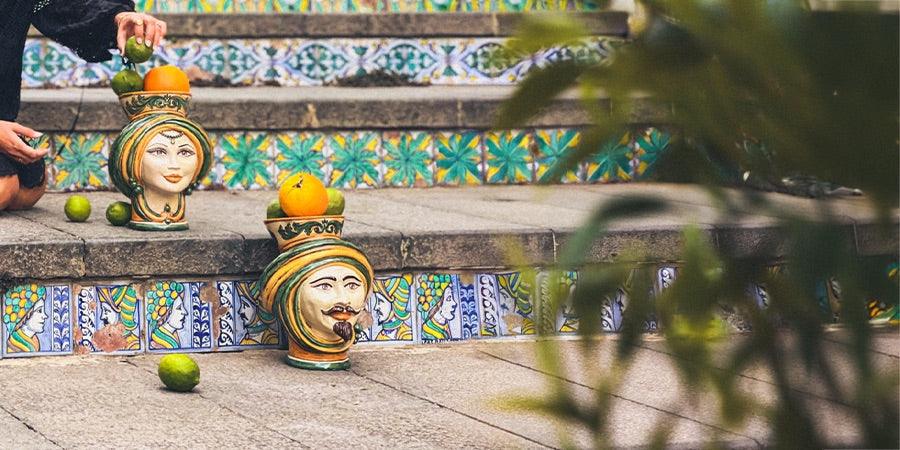
Caltagirone is a gem located in the Sicilian hinterland, internationally famous for its thousand-year-old ceramic tradition and its historical architecture that fascinates visitors from all over the world. Known as the "capital of ceramics," Caltagirone embodies centuries of history, art, and culture, reflected in its urban landscapes, artisanal traditions, and religious celebrations.
In this article, we will explore Caltagirone's monuments, traditional festivals, and must-see places, with a special focus on the famous Staircase of Santa Maria del Monte and the festivities of San Giacomo, celebrations that transform the city into a spectacle of lights and popular devotion.
The History of Caltagirone
Ancient origins and cultural influences
Caltagirone has an ancient history dating back over a thousand years, with roots in the Greco-Roman era and subsequent Arab, Norman, and Baroque influences. These diverse cultures have left traces in its monuments, churches, and, above all, in the art of ceramics, which became a symbolic identity of the city. The city is situated on hills that offer evocative views, and its strategic position contributed to making it a center for trade and cultural exchange.

The art of ceramics: a millennial tradition
Caltagirone ceramics are famous worldwide for their unique shapes and vibrant colors that decorate plates, vases, tiles, and sculptures. The ceramic tradition originated in the Arab era and solidified over centuries thanks to the skill of local artisans, who have passed down unique techniques and decorative motifs typical of Sicilian culture for generations. Even today, visiting Caltagirone means immersing oneself in a world of artisan workshops, where each piece of ceramic tells an ancient story.
Evolution over the centuries
Over the centuries, Caltagirone developed, adapting to new needs and cultural influences. After Norman and Spanish rule, the city became an important center for Baroque art and architecture. The Staircase of Santa Maria del Monte, built in 1606, is the perfect example of how the city continued to evolve, transforming historical influences into an artistic representation that is now a symbol of Caltagirone itself.
[[vaso-pigna]]
Why is Caltagirone Famous?
The artistic ceramics of Caltagirone
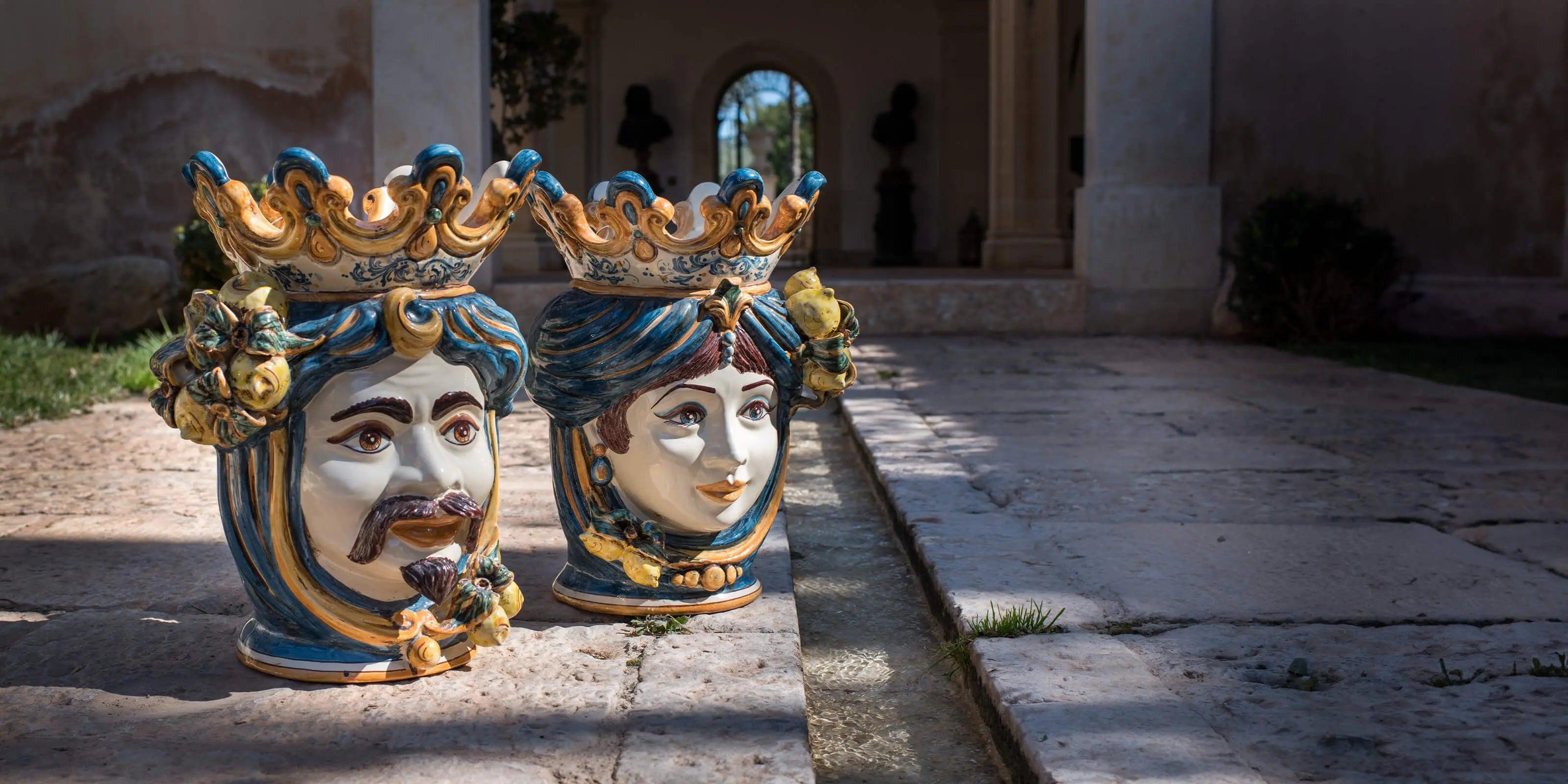
Caltagirone ceramics represent an art deeply rooted in the cultural fabric of the city and Sicily. From the traditional "Teste di Moro" (Moorish heads) to decorative tiles, every piece made by local artisans embodies a long artistic tradition. The production of ceramics is distinguished by the use of geometric, floral, and symbolic motifs, inspired by historical periods, from the Arab to the Baroque. Today, many visitors come to Caltagirone to purchase unique pieces and to observe artisan workshops that demonstrate the entire production process.

The Staircase of Santa Maria del Monte
The famous Staircase of Santa Maria del Monte is one of Caltagirone's most important symbols. Built in 1606 based on a design by architect Giuseppe Giacalone, it was initially conceived as a steep road, but later became a series of steps interrupted by small squares. In the 19th century, it was transformed into a single ramp with 142 steps, and in the 1950s, each riser was decorated with majolica tiles depicting typical Sicilian ceramic themes, making it an open-air work of art.
During the festivities in July for San Giacomo and in August for Maria SS. del Monte, the Staircase transforms into a spectacle of lights with the traditional "luminaria," where thousands of oil lamps illuminate the steps, creating a luminous design visible from across the city. It is a moment of rare beauty that attracts visitors from all over the world.
Ceramic fairs and festivals
Every year, Caltagirone hosts a series of events dedicated to ceramics and local craftsmanship. The ceramics festival is an opportunity for visitors to explore the artisan market, participate in ceramic workshops, and admire art exhibitions. The fairs allow appreciation of the creativity of local artisans, who display both traditional products and contemporary works. These events strengthen the city's connection to its cultural heritage and allow tourists to immerse themselves in Caltagirone's traditions.
[[teste]]
Exploring Historical Monuments

Palazzo Senatorio and Corte Capitaniale
Palazzo Senatorio is a symbol of Caltagirone's historical and political importance. Located in the city center, it represents one of the most significant buildings from an architectural and cultural perspective. Built in the 17th century, this palace housed the Civic Senate, the center of public and decision-making life. Next to the palace is the Corte Capitaniale, built in 1601 by the renowned sculptors of the Gagini family. This complex, an extraordinary example of civil architecture of the time, reflects the influence of the classical and Baroque styles typical of the Kingdom of Sicily.
The Church of San Francesco d’Assisi
The Church of San Francesco d’Assisi is one of Caltagirone's most important historic churches. Built in the medieval era and modified during the Baroque period, the church is known for its imposing facade and interiors rich in artworks. Among these, Filippo Paladini's "Deposition" stands out, a masterpiece that attracts visitors and art enthusiasts. The Church of San Francesco d’Assisi is a place of profound spirituality and represents an important part of the city's religious and artistic heritage.

The Villa Comunale and the Teatrino
Designed by architect Basile in the 19th century, Caltagirone's Villa Comunale is an enchanting English-style urban park, perfect for relaxing strolls and admiring examples of decorative architecture. The villa is adorned with a balustrade featuring decorated vases, Moorish heads, and majolica pinecones, elements that embody the city's ceramic tradition. Inside the Villa, the Teatrino offers a spectacular viewpoint from which to enjoy a unique view of the city, and is decorated with majolica and arabesques that make it an architectural gem.
Photo by Rino Porrovecchio from Palermo, Italy. Source Wiki
Main Attractions of Caltagirone
The Ceramics Museum

The Ceramics Museum of Caltagirone is an essential stop for anyone wanting to discover the history and evolution of Sicilian ceramic art. Located within the Villa Comunale, the museum houses a collection ranging from prehistory to the early 20th century, showcasing the evolution of techniques and decorative motifs. Each room tells a phase of ceramic history, with ancient artifacts and masterpieces by local artisans. This museum is a precious testament to the artistic tradition that has made Caltagirone famous worldwide. Here we discuss the origins of Caltagirone ceramics and some pieces exhibited in the Caltagirone Ceramics Museum.
The Church of Santa Maria del Monte
The Church of Santa Maria del Monte is one of Caltagirone's oldest and most important churches. Located at the top of the famous Staircase, this church represents a religious and historical landmark for the community. The building houses a 13th-century panel depicting the Madonna di Conadomini, one of the city's most revered artworks. With its austere architectural style and interiors rich in history, the Church of Santa Maria del Monte is a place of contemplation and devotion for the people of Caltagirone.
Piazza Umberto I and the Cathedral of San Giuliano
Piazza Umberto I is the heart of Caltagirone, surrounded by historic buildings and adorned by the Cathedral of San Giuliano. Originally built in the 12th century and later renovated in Baroque style, the Cathedral is one of the city's most important places of worship. The Baroque facade, completed in the early 20th century, is a perfect example of Sicilian religious architecture. Inside, one can admire artworks and decorations that testify to the faith and history of the people of Caltagirone.
[[teste2]]
The Staircase of Santa Maria del Monte: Symbol of Caltagirone
History and structure of the Staircase
The Staircase of Santa Maria del Monte, built in 1606 based on a design by architect Giuseppe Giacalone, represents the city's "backbone," as reported by ancient local historians. Initially conceived as a steep road, it was later transformed into a series of steps with intermediate squares. In the 19th century, the staircase became a single ramp of 142 steps, making it a continuous path to the top of the city. In the 20th century, each riser was decorated with polychrome majolica tiles, depicting typical Sicilian ceramic motifs, from the Arab era to the 19th century.

The luminaria of the Staircase for San Giacomo
Every year, on July 24th and 25th, the Staircase transforms into a unique light spectacle to celebrate San Giacomo, the Patron Saint of Caltagirone. For the luminaria, thousands of hand-decorated and colored "coppi" (earthenware tiles) are placed along the steps, creating a striking design illuminated by oil-fueled "lumére" (lamps). This event, which began in the 17th century, is rooted in ancient popular traditions and offers visitors a breathtaking view of the city, illuminated by the flickering reflections of the lights, in a crescendo of magic and popular devotion.
The luminaria festival on August 14th and 15th for Maria SS. del Monte
In addition to the feast of San Giacomo, the Staircase is also illuminated on August 14th and 15th for the solemnity of Maria SS. del Monte. The oil lamps create a new design each year, inspired by religious and cultural themes, offering an experience of beauty and spirituality. The festival attracts residents and tourists, who gather to admire the charm of the illuminated staircase. This summer event further enriches Caltagirone's calendar of celebrations, making it one of Sicily's most exciting cultural destinations.
The Significance of the Feast of San Giacomo
Historical origins and religious celebrations
Saint James the Apostle has been the Patron Saint of Caltagirone since 1109, when the Norman Count Roger declared Saint James the protector of the city, in devotion for his support in battles. The patronal feast, celebrated annually on July 24th and 25th, is an event that mixes devotion, history, and spectacle, attracting faithful and tourists from all over Sicily and beyond. The celebrations begin with religious rites in the main churches and conclude with a grand procession that crosses the city.
Procession and popular devotion
One of the most deeply felt moments of the feast of San Giacomo is the nocturnal procession, which takes place on the evening of July 24th and continues until the first light of July 25th. The statue of the apostle, made by the goldsmith and sculptor Vincenzo Archifel in 1518, is carried in procession through the streets of Caltagirone on an imposing fercolo (a type of processional float), preceded by the silver casket containing a relic of Saint James. This ancient ritual symbolizes the saint's protection over the city, and the fercolo, accompanied by the songs of the faithful, follows a historical route that represents an act of faith and popular devotion.
Procession of the Civic Senate and celebrations on July 24th-25th
On July 24th and 25th, the celebrations reach their climax with the Procession of the Civic Senate, a historical parade in which city authorities wear 17th-century attire to attest to the prestige of the ancient "Universitas" of Caltagirone. The procession accompanies civil and religious authorities to official ceremonies and passes through the city's main streets, offering a unique spectacle. The procession is followed by the luminaria of the Staircase of Santa Maria del Monte, which is illuminated by thousands of "coppi" and oil lamps, creating a fascinating light display that honors the saint and enchants those present.
Events and Traditional Festivities in Caltagirone

Easter and religious celebrations
Easter is one of Caltagirone's most deeply felt festivities, celebrated with a series of rites and processions that represent the Passion of Christ. Among the traditions, the Good Friday procession stands out, in which local confraternities, dressed in traditional attire, accompany sacred statues and religious images through the city's streets. Holy Week is a period of contemplation and devotion for the community, involving not only residents but also visitors attracted by the solemnity of the Easter rites.
Feast of San Pietro and its historical significance
On June 29th, Caltagirone celebrates San Pietro (Saint Peter), a festivity dating back to ancient times. This celebration is characterized by religious events, processions, and moments of sharing among citizens. The statue of San Pietro is carried in procession through the city's main streets, accompanied by faithful and folk groups. The feast of San Pietro is an opportunity to keep alive a tradition that unites the city and celebrates the sense of belonging and cultural identity.
Christmas and Caltagirone's living nativity scene
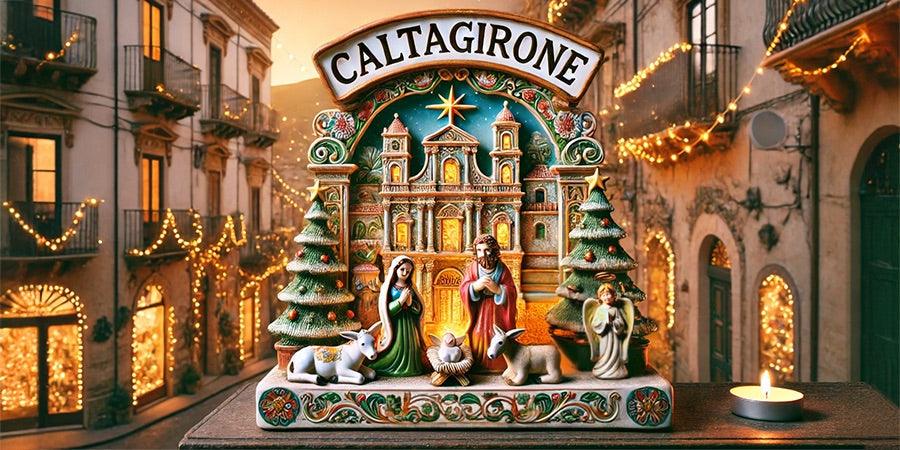
During the Christmas season, Caltagirone transforms into an atmosphere of magic and tradition. In addition to the Christmas markets and illuminations that decorate the city, the living nativity scene, recreated in the historic districts, is famous. This event attracts numerous visitors, who can witness scenes of the Nativity reproduced with traditional costumes and realistic settings. The living nativity scene represents one of the city's most fascinating Christmas traditions, combining history, art, and spirituality.
Itineraries: What Not to Miss
Ceramics tour and artisan workshops
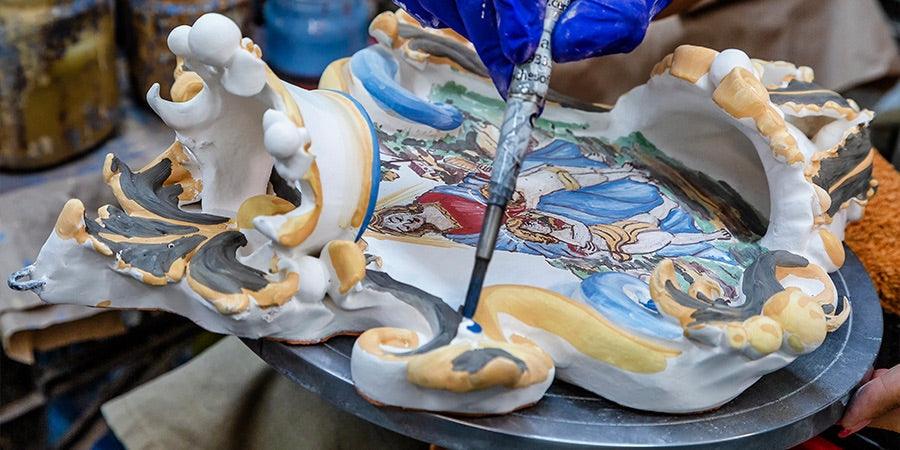
Visiting Caltagirone means immersing oneself in the ceramic tradition through a tour of its artisan workshops. Several workshops in the city offer live demonstrations of ceramic processing and decorating techniques, giving visitors the opportunity to create personalized small objects. These guided tours allow close observation of the artisans' skill and the purchase of unique pieces, perfect as a souvenir of a trip to the city of ceramics. To book your organized tour, contact us for more information.
Strolls through the historic districts
Caltagirone boasts a charming historic center, with narrow alleys, picturesque squares, and ancient churches that tell centuries of history. Among the most interesting districts are San Giorgio and San Giacomo, where important religious and civil buildings are located. A stroll through these streets offers a journey into the past and allows admiration of architectural details typical of Sicilian art, such as wrought-iron balconies and ceramic decorations.
Local culinary experiences
For food lovers, Caltagirone offers numerous opportunities to discover Sicilian gastronomy. From traditional trattorias to artisan pastry shops, the city offers typical dishes such as pasta alla Norma, arancini, and Sicilian cassata. Furthermore, during festivities and festivals, it is possible to taste sweets and specialties prepared exclusively for these occasions. A culinary experience in Caltagirone is a journey into the flavors and traditions of Sicilian cuisine.
The Sicilian Puppet Theater and the Puppet Tradition
History of puppet theater in Caltagirone
The Sicilian puppet theater is a popular art form with deep roots in the culture of Caltagirone and Sicily. This type of show, with finely carved and animated puppets, tells stories of knights, ladies, and epic battles, inspired by the stories of the paladins of France and the Song of Roland. In Caltagirone, the puppet theater keeps this tradition alive, with performances that continue to fascinate adults and children alike.
Gesualdo Pepe Collection and the Puppet Museum

The Caltagirone Puppet Museum is dedicated to the collection of Sicilian puppets belonging to Gesualdo Pepe, a master puppeteer who helped preserve this art form. The museum houses not only puppets but also historical posters and ancient books, offering a complete immersion into the culture of Sicilian puppets. Visitors can learn the details of the performances and see the hand-carved puppets up close, each of which is a unique work of art.
Source and Image: edizioneincontri.it
The culture of Sicilian folk tales
Puppet theater is not just entertainment but also a means of transmitting popular stories and values. Each performance reflects aspects of Sicilian culture, from a sense of honor to religious devotion. The stories told, often heroic or sacrificial, teach life lessons and keep Caltagirone's cultural roots alive. Puppet theater is an important part of Sicilian cultural heritage and a must-see attraction for visitors to the city.
[[pigne]]
Travel Tips for Visiting Caltagirone
How to get to Caltagirone
Caltagirone is easily accessible from various Sicilian cities. By car, the city is about an hour from Catania, via the A19 motorway and the SS124 state road. For those arriving by train, there are direct connections to Catania and Gela. Regional buses are another convenient option for those who prefer public transport. Once you arrive, the historic center is easily explored on foot, allowing you to fully enjoy the city's beauty.
Where to stay for an authentic experience
Caltagirone offers a wide choice of accommodation, from characteristic bed & breakfasts located in the historic center to hotels that combine modern comfort and historic settings. For an authentic experience, it is recommended to stay in one of the surrounding holiday homes or agriturismi, which allow you to enjoy the tranquility of the Sicilian countryside. Many accommodations also offer tastings of typical local products, enriching visitors' experience.
Best times to visit
The ideal time to visit Caltagirone is in spring or summer, when the climate is mild and you can participate in the Easter, Saint James, and Maria SS. del Monte celebrations. During July and August, the city comes alive with events and shows, including the illuminations of the Scalinata. The Christmas period is also charming, thanks to the living nativity scene and the decorations that envelop the city in a magical atmosphere. Every season in Caltagirone has its unique charm.
Curiosities and Legends of Caltagirone
The legend of the Madonna di Conadomini
One of the oldest legends of Caltagirone is that of the Madonna di Conadomini, venerated in the Church of Santa Maria del Monte. According to tradition, the panel depicting the Madonna dates back to the 13th century and miraculously survived various historical events. The legend tells that the Madonna protected citizens from calamities and dangers, thus becoming a symbol of faith and hope for the community. Even today, the Madonna di Conadomini is an important religious icon for the inhabitants of Caltagirone.
Mysteries behind the ceramic Moorish heads
The famous ceramic "Moorish Heads," found on many balconies and courtyards in Caltagirone, are linked to a legend of love and revenge. It is said that, during the Arab domination in Sicily, a young Sicilian woman fell in love with a Moor. However, when she discovered that the man intended to leave her and return to his homeland, the young woman, in a fit of jealousy, killed him and turned his head into a flower vase. This popular tale gives a particular meaning to these sculptures, which are now a symbol of local craftsmanship.
Stories of artisans and ancient workshops
The art of ceramics in Caltagirone is accompanied by stories and anecdotes of artisans who have contributed to passing down age-old techniques. Every workshop has its own history, and some have been active for generations. Local artisans are known for their mastery and the passion with which they create each piece. Visitors can explore these workshops and discover the secrets of the craft, immersing themselves in a world of tradition and creativity.
Caltagirone's Role in Sicilian Tourism
Importance of cultural tourism
Caltagirone is a major attraction for cultural tourism, thanks to its artistic heritage and ceramic tradition that makes it unique in the world. Historical attractions, museums, and religious festivals attract thousands of visitors every year, significantly contributing to the local economy. The city offers tourists an authentic experience, allowing them to deeply understand Sicilian culture through its artistic and spiritual manifestations.
Impact of ceramics on the local economy
Ceramics represent not only an art but also an economic pillar for Caltagirone. Artisan workshops and ceramic shops attract buyers from all over the world, generating a continuous flow of visitors and creating job opportunities for the local community. Furthermore, Caltagirone's artisans participate in international fairs and exhibitions, bringing the city's name worldwide and consolidating its reputation as the capital of ceramics.
Projects to preserve traditions
To ensure that the art of ceramics continues to flourish, conservation and cultural promotion projects have been launched. Caltagirone collaborates with local entities and cultural organizations to preserve artisanal techniques and promote educational and training events for new generations. Support for these projects ensures that the city maintains its identity and continues to be a point of reference for cultural and artistic tourism in Sicily.
Conclusion: The Unique Essence of Caltagirone
Caltagirone is a city that enchants with its history, traditions, and the art that permeates every corner. From religious celebrations to the illumination of the Scalinata di Santa Maria del Monte, every event is an opportunity to rediscover the deep connection of the community with its roots. Ceramics, the city's quintessential symbol, represent an art that tells centuries of cultural influences and artisanal skill.
Visiting Caltagirone means immersing oneself in a journey through time, where past and present merge into a unique experience. Visitors can explore the historic alleys, admire artistic masterpieces, and taste local cuisine, fully experiencing the essence of Sicily. Caltagirone remains an unmissable destination for those who wish to discover the authentic heart of the island up close, celebrating the art, history, and beauty of a city that continues to enchant generation after generation.

Leave a comment
All comments are moderated before being published.
This site is protected by hCaptcha and the hCaptcha Privacy Policy and Terms of Service apply.