


Introduction
Ceramics, with its ancient history and timeless charm, tells us stories of tradition, innovation, and creativity. From Etruscan vases to modern decorative plates, this world captivates enthusiasts and the curious alike. In this article, we will explore the fundamental concepts of ceramics, creating a journey that starts from essential terms and reaches the most iconic techniques. Whether you are looking for inspiration to decorate your home or want to discover the art behind each piece, this guide is an excellent starting point.
Glossary of essential terms
Ceramics is rich in technical terms, each with a precise history and function. Clay is the heart of every creation, a material that transforms into terracotta, porcelain, or stoneware depending on its characteristics. Terracotta, with its warm color, is often used for rustic and natural objects. Porcelain, on the other hand, refined and elegant, lends itself to delicate but resistant creations. Finally, stoneware stands out for its robustness and impermeability, ideal for dinnerware and plates.
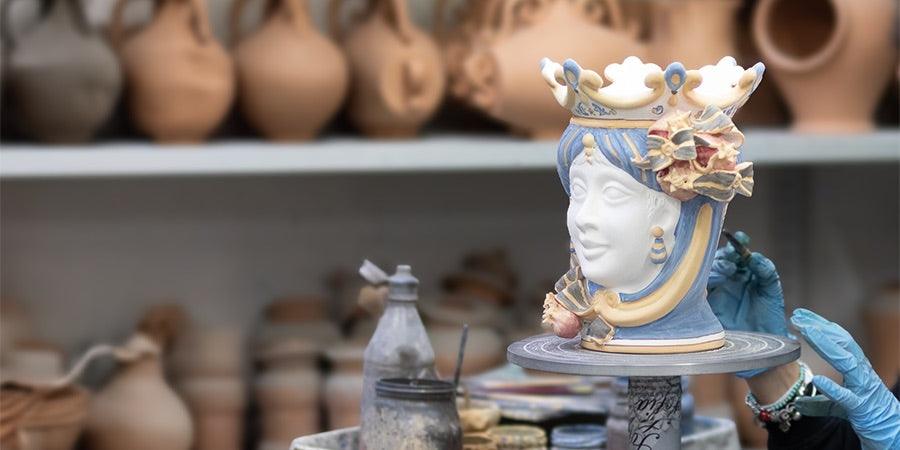
Once molded, the ceramic object goes through a crucial phase called "bisque," the first firing that makes it solid but still porous. Subsequently, glazing adds a final touch, making the surface shiny and protected. Decorative techniques such as engobe, a mixture of liquid clay and pigments, add uniqueness to the work before the final firing.
Main processing techniques
Behind every piece of ceramic is a handcrafted process that combines skill, precision, and creativity. Throwing, perhaps the most iconic technique, involves molding clay on a rotating wheel. With skilled hands, symmetrical objects such as vases and plates are created, giving shape to materials that tell stories.
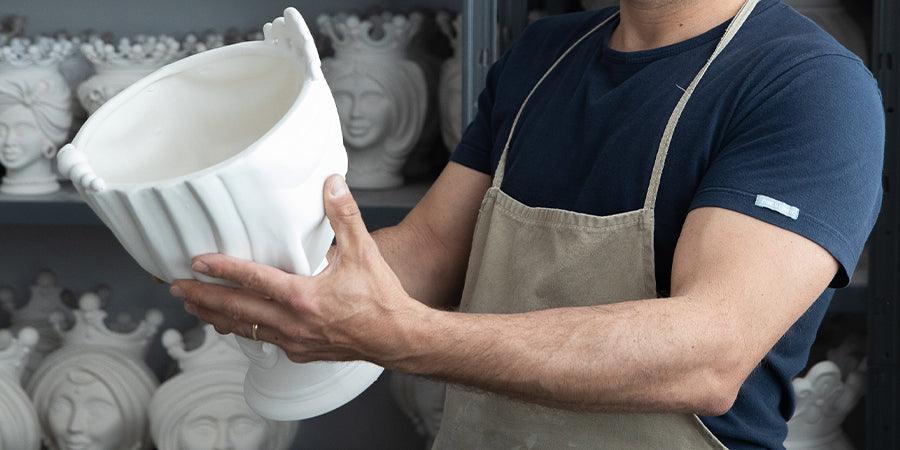
Hand-building, on the other hand, frees the artisan's creativity. Among the most common techniques are pinching, which allows the clay to be shaped directly with the fingers, and the use of slabs, where the clay is rolled out into sheets and assembled like a three-dimensional puzzle. Slipcasting represents another possibility, particularly suitable for mass production: here, liquid clay is poured into molds, offering precision and uniformity in shapes.
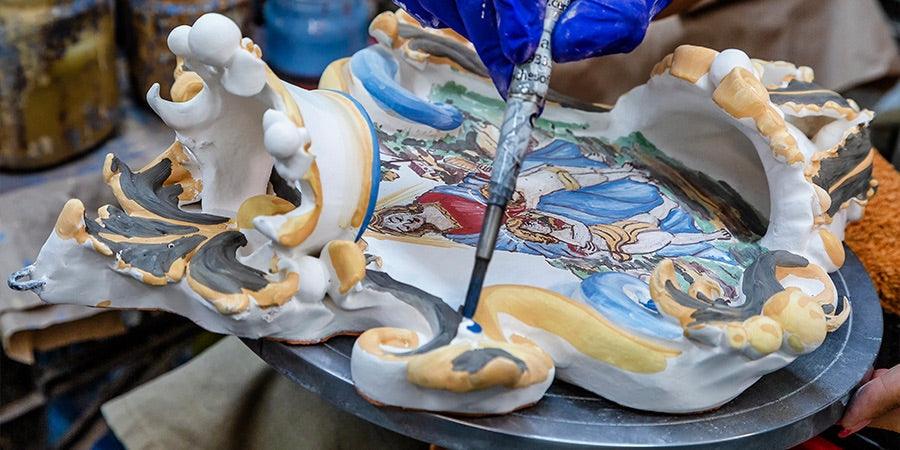
Finally, decoration is the soul of every piece. Engravings, underglaze painting, and three-dimensional reliefs give character and depth, transforming a simple object into a true work of art.
[[teste]]
Stages of the production process
Every ceramic creation is the result of a meticulous process that begins with the preparation of the clay, a fundamental step to eliminate impurities and air bubbles that could compromise the final result. Subsequently, forming takes place, which can be done through throwing, hand-building, or slipcasting, bringing the desired shape to life.
Once molded, the piece must dry slowly during the drying phase to prevent cracks or deformations. Two firings follow: the first, called bisque, solidifies the object, making it porous and ready for decoration. After adding colors and glazes, the piece is subjected to a second high-temperature firing, which fixes the details and completes the process.
Practical tips for approaching the world of ceramics
To enter this fascinating universe, it is useful to attend a basic course at workshops or art schools, where you can learn the fundamental techniques. Alternatively, you can start experimenting at home with basic materials such as modeling clay and simple tools. Remember to use water sparingly during molding so as not to weaken the material and to let each piece dry thoroughly before firing.
Conclusion
Ceramics is not just an art, but a journey that combines tradition, creativity, and manual skill. Now that you know the terms, techniques, and secrets behind each piece, you can appreciate the value of this ancient practice even more. If you want to see how the magic of ceramics comes to life, explore the Ceramiche Sofia catalog and let yourself be inspired by our unique creations.
Discover the timeless beauty of artisanal ceramics and find the perfect piece for your home.



Leave a comment
All comments are moderated before being published.
This site is protected by hCaptcha and the hCaptcha Privacy Policy and Terms of Service apply.