


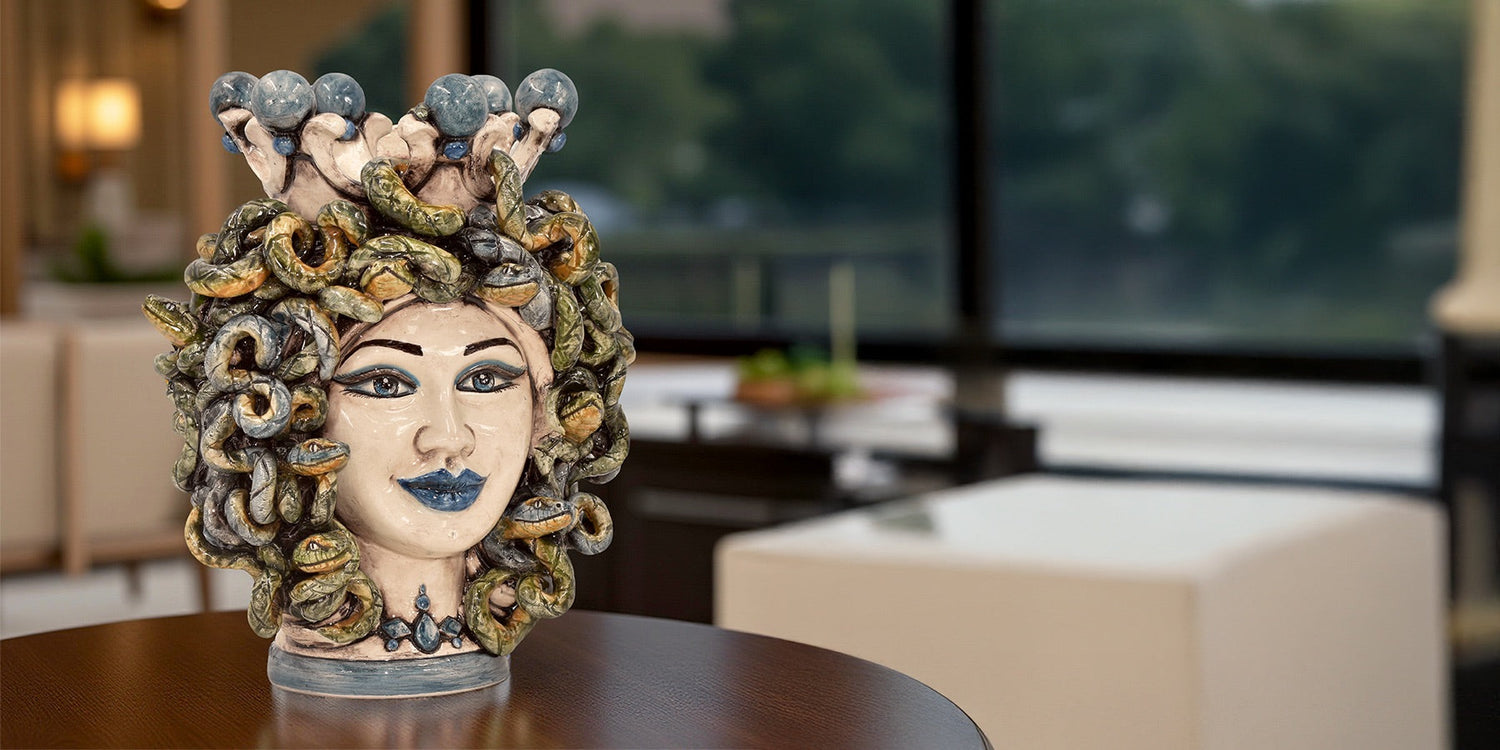
Medusa's Head: From Greek Myth to Caltagirone Ceramics
The figure of Medusa is one of the most fascinating in Greek mythology. Along with Stheno and Euryale, she is one of the three Gorgons, mythological creatures with the power to turn anyone who met their gaze into stone.
In this article, we will explore how the head of Medusa transitioned from Greek mythology to artistic representations in Caltagirone ceramics, a Sicilian artisanal tradition renowned for its beauty and craftsmanship.
[[teste2]]
The Myth of Medusa in Greek Mythology
The myth of Medusa is rooted in ancient Greece, where she was considered one of the Gorgons. Medusa was the only one of the three sisters to be mortal, a fact that made her particularly interesting and dangerous in the eyes of the ancient Greeks.
The Origins of Medusa and the Gorgons
Medusa and her sisters, Stheno and Euryale, were the daughters of Phorcys and Ceto, primordial sea deities. Their descent from sea deities made them powerful and feared creatures.
The Power of the Petrifying Gaze
One of Medusa's most well-known characteristics was her petrifying gaze, capable of turning anyone who met it into stone. This lethal power made her a feared and respected figure in antiquity.
Medusa as Daughter of the Sea Deities
Her connection to the sea deities emphasized her monstrous nature and her ability to instill terror. The depiction of Medusa with snakes for hair added an extra element of terror and fascination.
| Characteristics | Description | Significance |
| Petrifying Gaze | Turns anyone who meets it into stone | Lethal and feared power |
| Snakes in Hair | Symbolizes terror and fascination | Adds an element of monstrousness |
| Marine Descent | Daughter of Phorcys and Ceto | Confers power and monstrous nature |
Medusa was the only one of the Gorgons not to be immortal and was beheaded by Perseus, an event that marks a crucial point in her mythological story.
The Legend of Perseus and the Decapitation of Medusa
In Greek mythology, the legend of Perseus and Medusa represents a combination of courage and cunning. Perseus, aided by the gods, managed to defeat the fearsome Gorgon.
The Mythical Clash between the Hero and the Gorgon
The confrontation between Perseus and Medusa was an epic event in Greek mythology. Perseus, equipped with a reflective shield, avoided Medusa's petrifying gaze and decapitated her with a precise blow.
Perseus's Cunning and the Reflective Shield
Perseus's cunning played a crucial role in his victory. Using the shield as a mirror, he could observe Medusa without looking directly into her stone eyes, thus avoiding petrification.
The Power of the Severed Head as a Weapon
Medusa's head, once severed, became a formidable weapon in Perseus's hands. Used to petrify his enemies, it represented a symbol of power derived from ancient myths.
Perseus, thanks to his victory over Medusa, became a legendary hero in Greek mythology, symbolizing the triumph of intelligence and courage over mythical conflict.

The Meaning and Symbolism of Medusa's Head
Medusa's head represents one of the most intriguing and complex symbols in Greek mythology, with a meaning that has evolved significantly over the centuries. This symbol, rich in meaning, has fascinated artists, historians, and mythology enthusiasts for centuries.
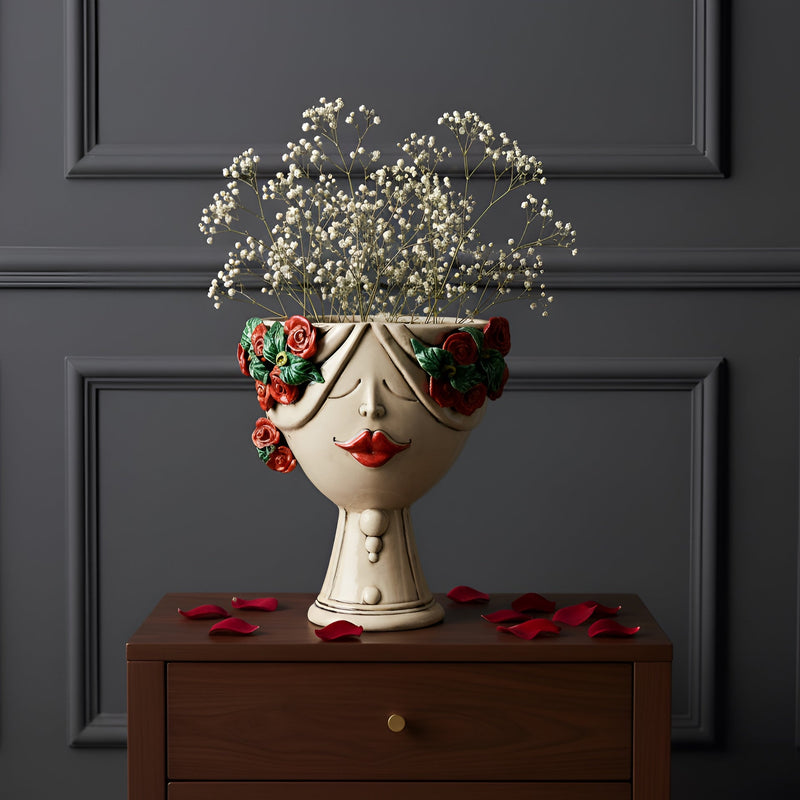
Zahira Head h 30 cm — Woman, Antiqued Mother-of-pearl | Caltagirone Ceramic
Acquista ora
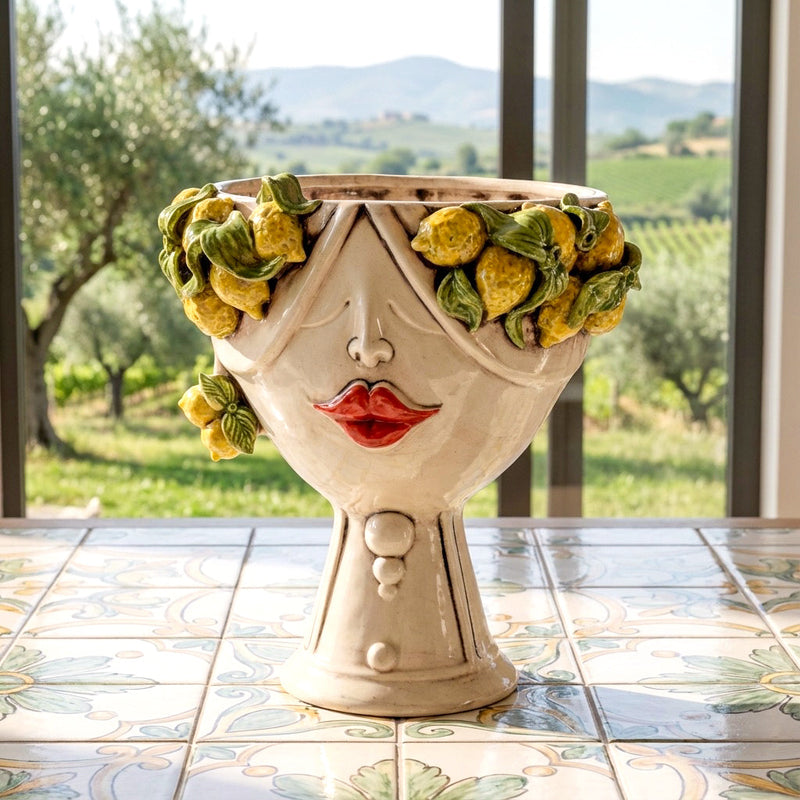
Zahira Head with Lemons h 30 cm — Woman, Mother-of-pearl | Caltagirone Ceramics
Acquista ora
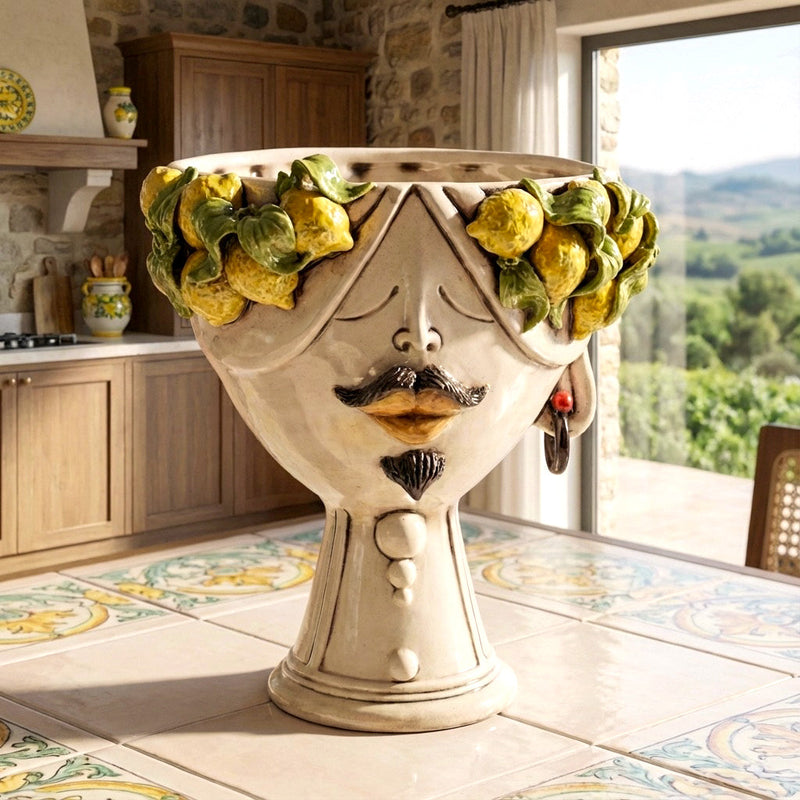
Zahira Head with Lemons H 30 cm — Man, Mother-of-Pearl | Caltagirone Ceramic
Acquista ora
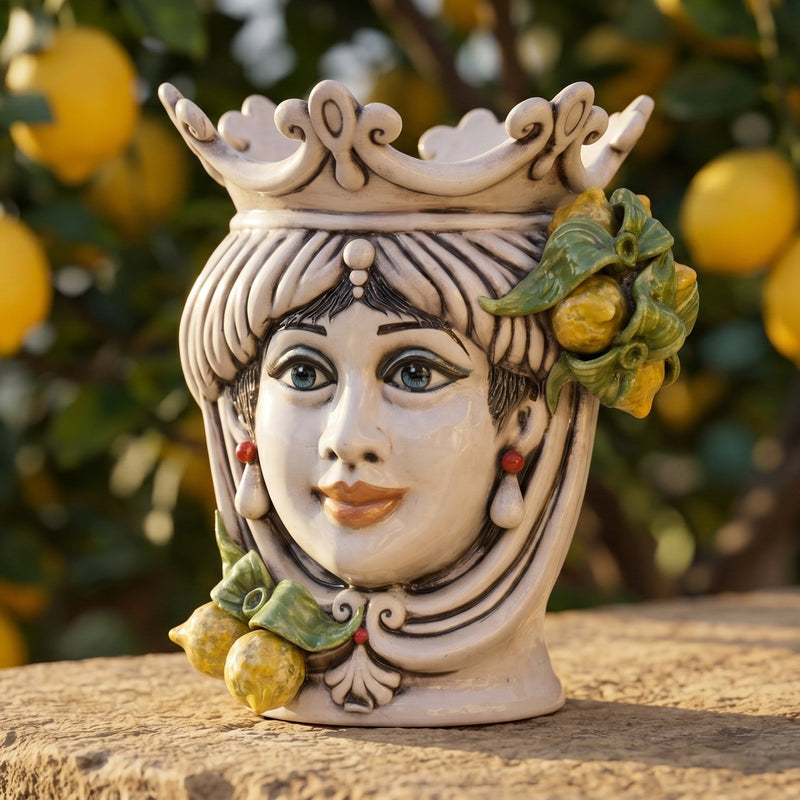
Moor's Head with Lemons h 25 cm — Woman, Mother of Pearl
Acquista ora
The Apotropaic and Protective Value
Medusa's head is often used as an apotropaic symbol, meaning to ward off evil and malevolent spirits. This use stems from the belief that Medusa's gaze could petrify her enemies, making her a powerful talisman against negative forces.
The use of Medusa's head as a protective symbol is documented in various ancient artworks and artifacts, demonstrating its importance in the culture and religion of the time.
Representations in Classical Art
In classical art, Medusa is frequently depicted with snakes for hair, symbolizing her power and monstrous nature. These representations not only highlighted her ability to inspire fear but also her complexity as a mythological figure.
Artworks depicting Medusa are numerous and range from sculptures to paintings, each offering a unique perspective on her symbolism and cultural significance.
Evolution of the Symbol through the Centuries
Over the centuries, the symbol of Medusa has undergone numerous transformations, adapting to the cultural and artistic contexts of different eras. From its origin in Greek mythology to its representations in modern art, Medusa remains a subject of great interest and fascination.
This evolution demonstrates the versatility and depth of the Medusa symbol, which continues to inspire artists and capture the public's imagination.
The Ceramic Tradition of Caltagirone
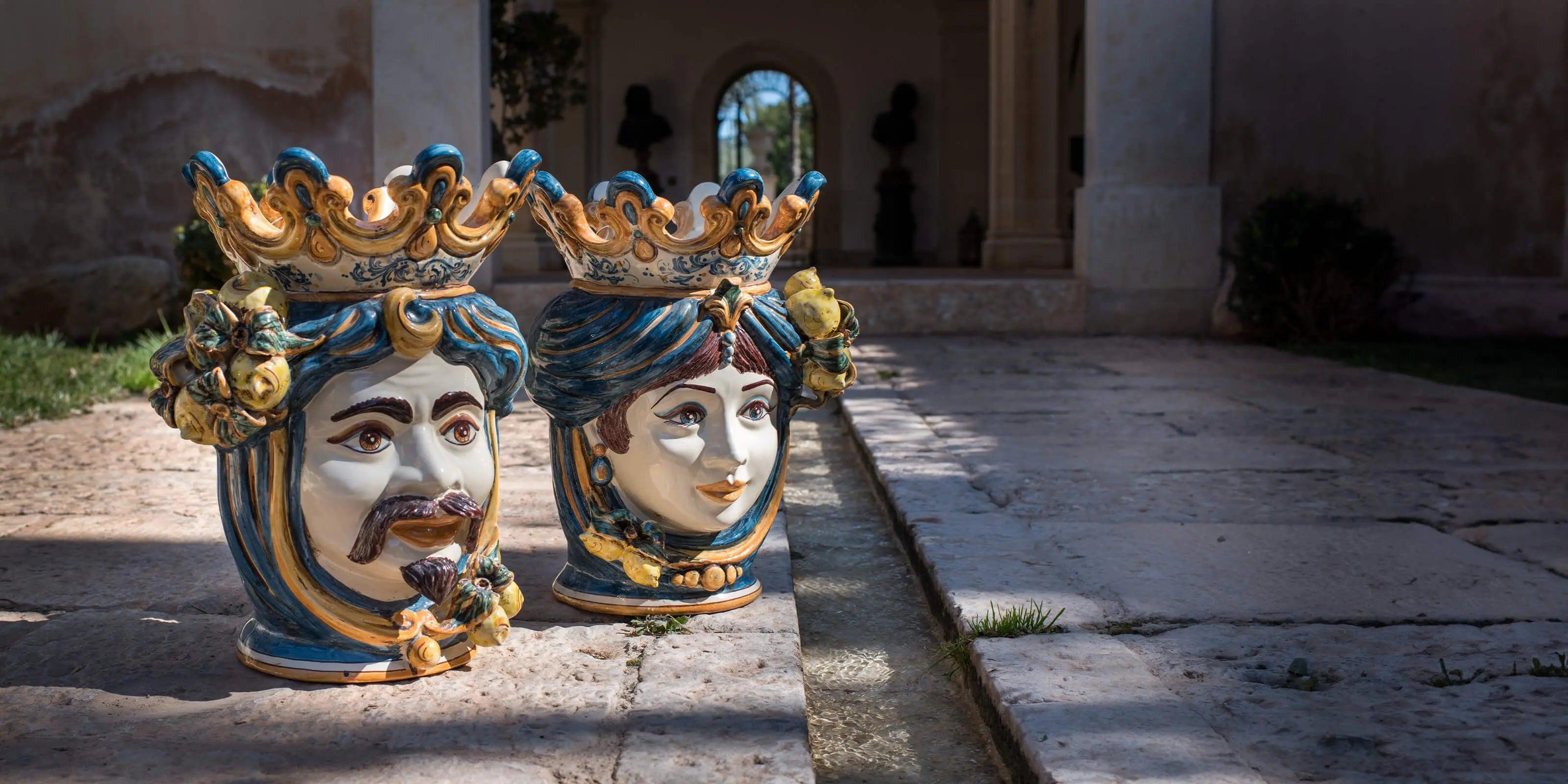
Caltagirone ceramics represent one of Sicily's most renowned artisanal traditions. For centuries, this city has been an important center for the production of high-quality ceramics, appreciated not only in Italy but throughout the world.

History and Origins of Sicilian Craftsmanship
Sicilian craftsmanship, and particularly Caltagirone ceramics, has a history spanning many centuries. The origins of this tradition are linked to the presence of high-quality clay deposits in the area, which allowed for the development of excellent ceramic production.
Processing techniques have been handed down from generation to generation, with local artisans continually refining their skills over the years. This has allowed Caltagirone ceramics to maintain a level of quality and originality that distinguishes it from other productions.
Processing Techniques and Characteristic Styles
The production of ceramics in Caltagirone is characterized by unique styles and decorations that reflect the rich history and culture of the territory. Local artisans use traditional techniques to create unique pieces, ranging from geometric decorations to mythological subjects.
Processing Techniques:
- Clay modeling
- Hand decoration
- Kiln firing
The Cultural Heritage of Calatine Ceramics
Caltagirone ceramics are considered an important cultural heritage of Sicily. They not only represent a high-quality artisanal tradition but are also a symbol of the region's history and identity.
| Year | Event | Description |
| 18th century | Introduction of new techniques | Caltagirone artisans begin to use new decoration techniques imported from abroad. |
| 19th century | Expansion of production | Ceramic production in Caltagirone increases significantly, making the city famous throughout Italy. |
| 20th century | Preservation of tradition | Local artisans work to keep the Caltagirone ceramic tradition alive. |
Caltagirone ceramics continue to be a symbol of artisanal excellence and an important element of Sicilian cultural heritage. Their beauty and quality are the result of centuries of tradition and dedication.
Medusa's Head in Ceramiche Sofia's Creations
Ceramiche Sofia brings the Greek myth of Medusa to life through its extraordinary ceramic creations. The artworks produced by Ceramiche Sofia are the result of artisanal mastery passed down through generations.
The Artistic Interpretation of Greek Myth
The artisans of Ceramiche Sofia reinterpret Medusa's head with an artistic approach that combines tradition and innovation. Each piece is unique and tells Medusa's story through different forms and colors.
Variety of Sizes and Styles Available
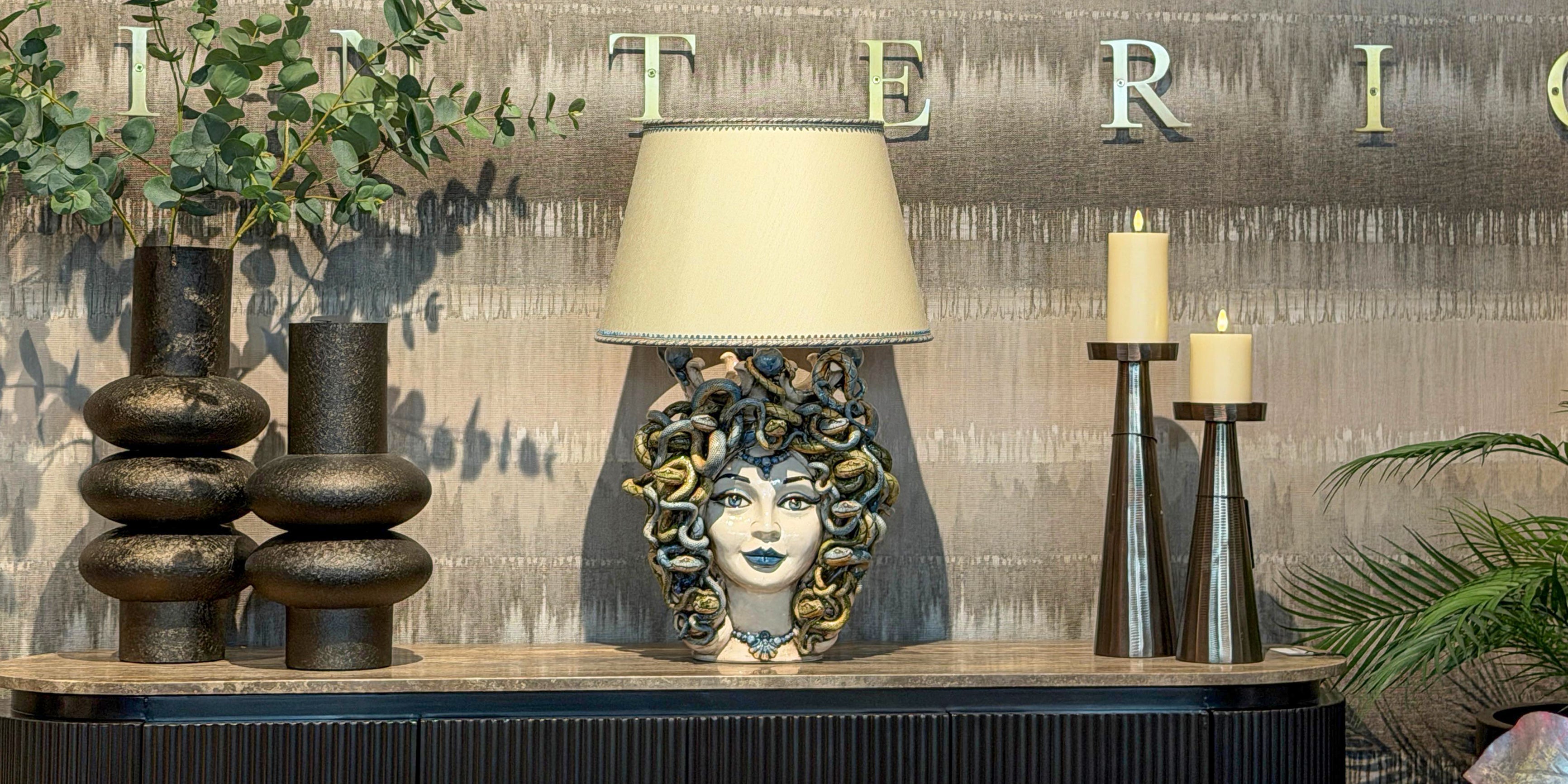
Ceramiche Sofia offers a range of Medusa heads in various sizes and styles, suitable for any type of decor and personal taste. Small decorative heads are perfect for display on shelves or mantels, adding a touch of elegance and mystery to any room. Large wall art pieces are true works of art that capture the eye and become the focal point in any space.
The Artisanal Production Process
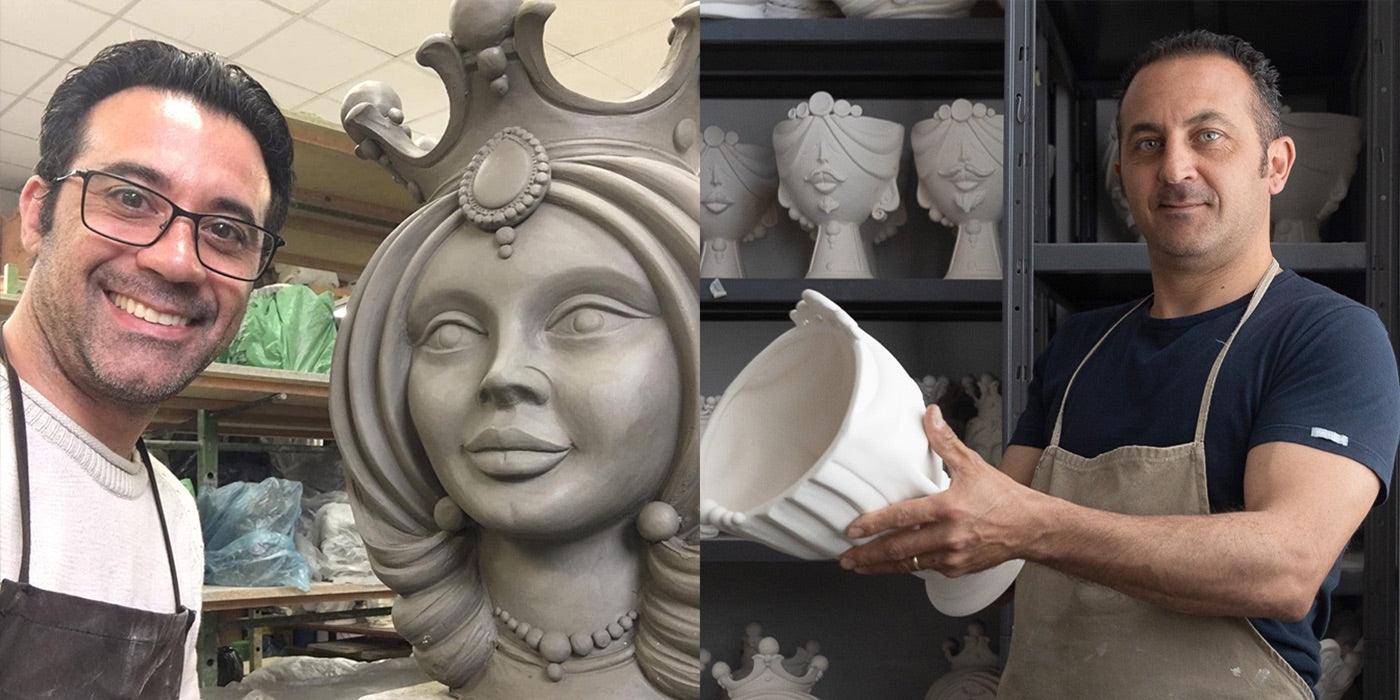
The creation process of the Medusa heads is entirely handcrafted. The artisans of Ceramiche Sofia work with dedication and passion, shaping and decorating each piece with meticulous care.
Attention to detail and artisan mastery ensure that each work is unique and of high quality.
Distinctive Features of Caltagirone Medusa Heads
Caltagirone's Medusa heads are an example of how art and mythology can merge harmoniously. These artworks are known for their beauty and intricate details that reflect the rich local craft tradition.
Typical Colors and Decorations
Medusa heads produced in Caltagirone are characterized by vibrant colors and intricate decorations that add a touch of drama and beauty to these artworks. The colors used are often inspired by nature and Sicilian culture, creating a strong link between art and the territory.
The Expressiveness of Faces and Serpents
The expressiveness of the faces and serpents adorning the Medusa heads is a distinctive feature of these artisanal creations. The skill of local artisans in shaping and decorating Medusa heads gives each piece its own uniqueness and personality.
The Union of Mythological Tradition and Local Art
The combination of mythological tradition and local art makes each piece unique and represents an example of artisanal excellence. The Medusa head, a symbol of Greek mythology, finds an artistic representation in Caltagirone ceramics that is both traditional and innovative.
The figure of Medusa continues to inspire contemporary art with its eternal charm. From Greek mythology to Caltagirone ceramics, Medusa represents a symbol of power, protection, and beauty.
Medusa's eternal charm is evidenced by her presence in various art forms, from classical works to modern creations by Ceramiche Sofia. Her story and meaning continue to capture the imagination of artists and the public, ensuring that her myth lives on forever in contemporary art.
The representation of Medusa in Caltagirone ceramics is an example of how ancient myths can be reinterpreted in a modern key, keeping the Sicilian cultural and artistic tradition alive.

Medusa Head h 25 cm — with Red Beads | Caltagirone Ceramic
Acquista ora
Medusa Head h 48 cm — Antique Mother of Pearl | Caltagirone Ceramic
Acquista ora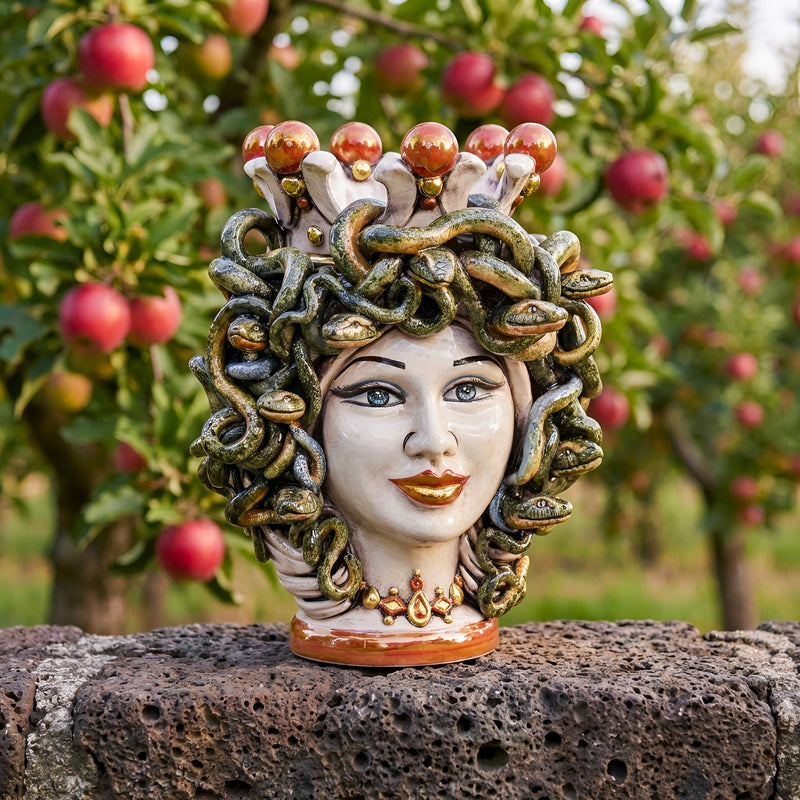
Medusa Head h 25 cm — Antiqued Mother of Pearl | Caltagirone Ceramic
Acquista ora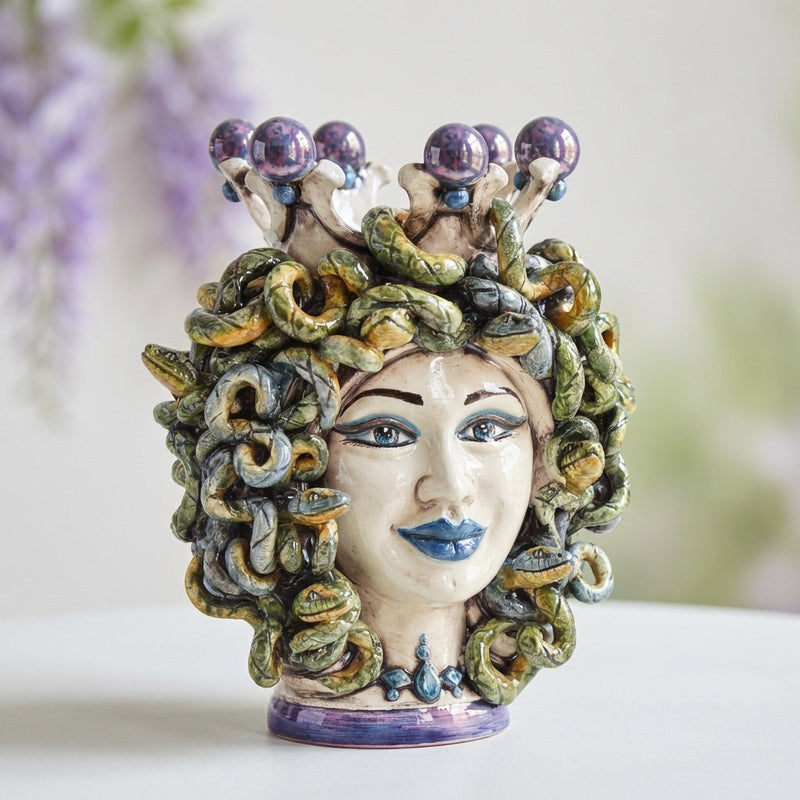
Medusa Head h 25 cm — Wisteria Luster | Caltagirone Ceramics
Acquista oraFAQ
Who was Medusa in Greek mythology?
Medusa was one of the three Gorgons, daughters of the sea deities Phorcys and Ceto. She was the only mortal of the three sisters and had the power to turn anyone who met her gaze to stone.
How was Medusa beheaded?
Medusa was beheaded by Perseus, who used a reflective shield to avoid her petrifying gaze. Medusa's head became a powerful weapon in Perseus's hands.
What is the meaning of Medusa's head?
The head of Medusa is often used as an apotropaic symbol to ward off evil and malevolent spirits. It also represents power and protection.
How is Medusa represented in classical art?
In classical representations, Medusa is often depicted with serpents instead of hair, symbolizing her power and monstrous nature.
What is the history of Caltagirone's ceramic tradition?
Caltagirone's ceramic tradition dates back centuries and is known for its creativity and processing techniques handed down from generation to generation.
How are Medusa heads made in Caltagirone ceramics?
Medusa heads are handcrafted using traditional artisanal techniques and are available in various sizes and styles.
What are the distinctive features of Caltagirone Medusa heads?
Caltagirone's Medusa heads are characterized by vibrant colors and intricate decorations that reflect the rich local craft tradition.
Why does the figure of Medusa continue to inspire contemporary art?
The figure of Medusa represents a symbol of power, protection, and beauty, and her story and meaning continue to capture the imagination of artists and the public.

Leave a comment
All comments are moderated before being published.
This site is protected by hCaptcha and the hCaptcha Privacy Policy and Terms of Service apply.