


Origins and History
Sicily, a land of sun, sea, and millennia of history, holds unique artistic traditions passed down from generation to generation. Among these, the ceramic Moorish heads represent one of the most fascinating expressions of local craftsmanship, rich in history, legends, and symbolism.
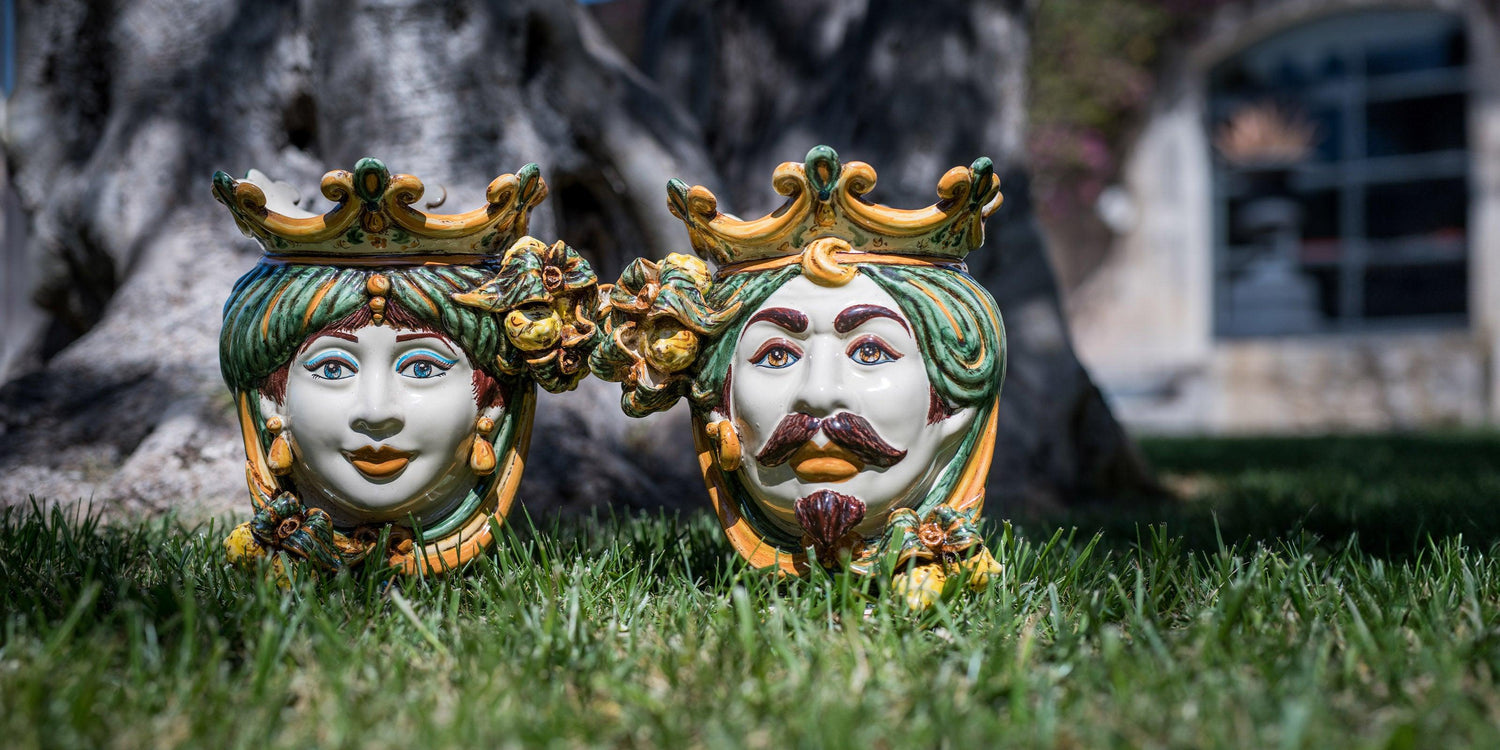
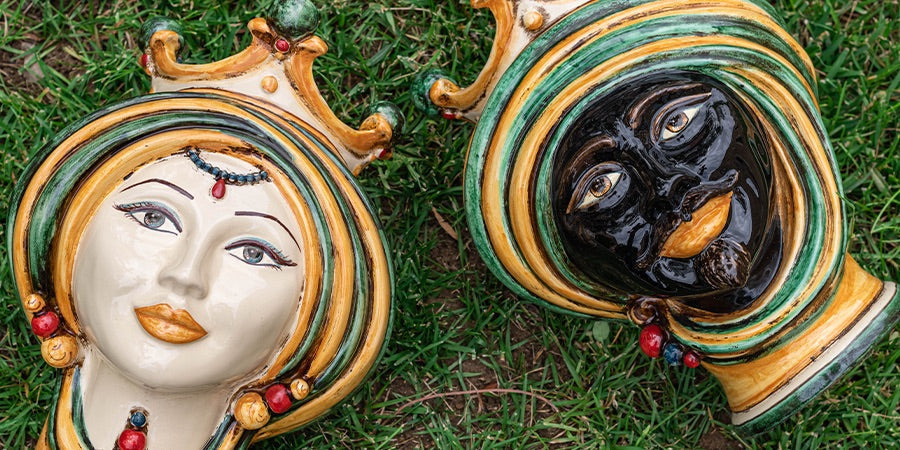
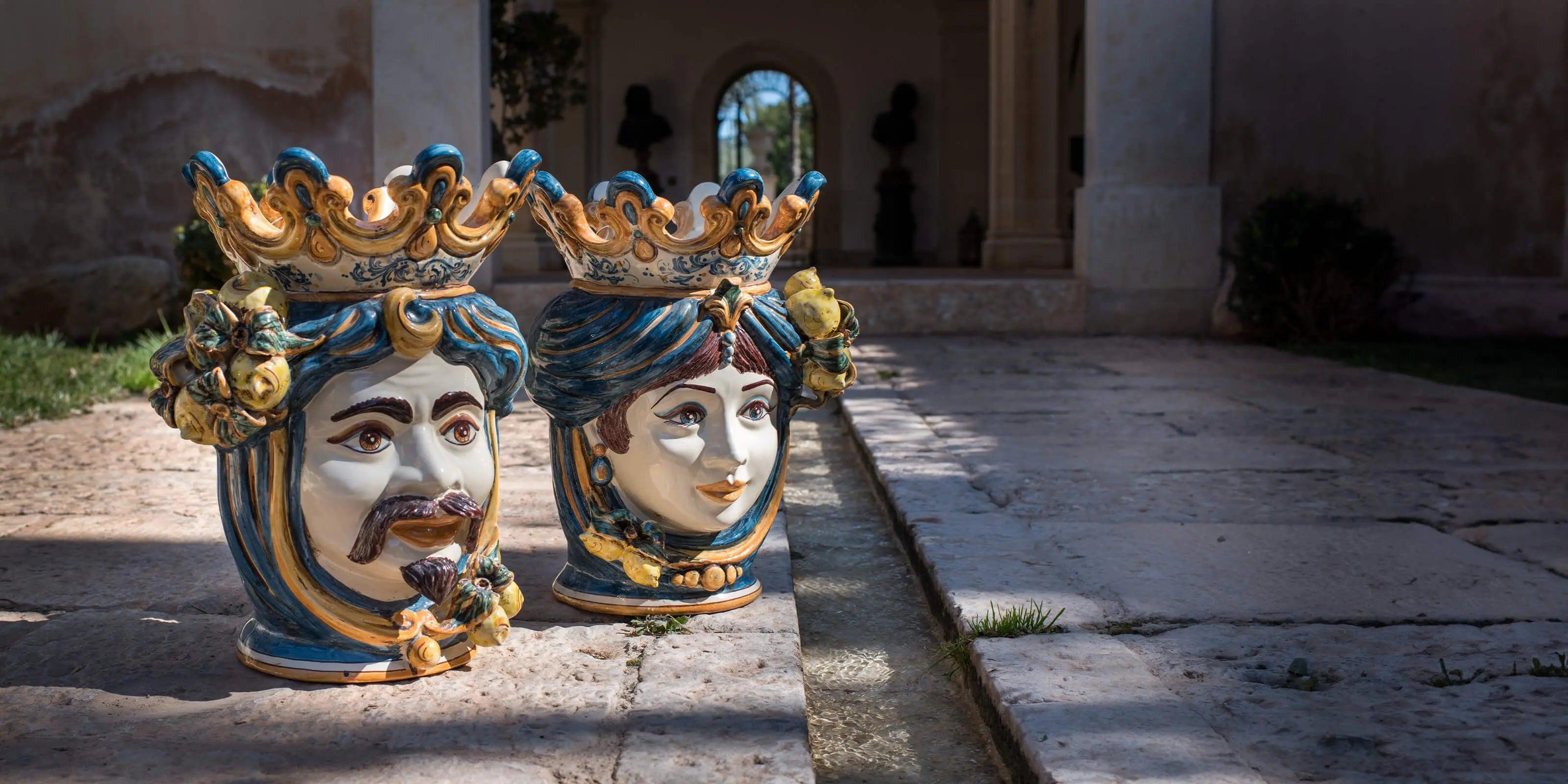
Moorish heads are ceramic vases depicting human faces, characterized by a wealth of detail, vibrant colors, and intense expressions. Their origin dates back to the period of Arab occupation in Sicily, between the 11th and 12th centuries, an era when the island was a melting pot of cultures, ethnicities, and traditions. According to the most famous legend, the invention of these works of art is due to a tragic love story between a young Sicilian girl and a young Moor, which concludes with an act of jealousy and revenge, giving life to the first Moorish head.
[[teste]]
Meaning and Symbolism
These head-shaped vases are not only magnificent examples of Sicilian craftsmanship but are also full of symbolism. They represent the island's cultural melting pot, witnessing the encounter and clash of different civilizations. Furthermore, they are a tribute to passion, love, but also to themes of jealousy and tragic destiny. The presence of decorative elements such as flowers, leaves, and fruits on their crowns transforms these works into symbols of abundance and fertility, deeply connected to the Sicilian land.
The Art of Ceramics in Sicily
The production of Moorish heads is part of the rich Sicilian ceramic tradition, known for its excellence since ancient times. Cities like Caltagirone, Santo Stefano di Camastra, Sciacca, and Palermo are renowned for ceramic production, each with its own peculiarities and distinctive styles. The creation of Moorish heads requires great craftsmanship: from the modeling of clay to meticulous decoration, every phase of the process is meticulously cared for, making each piece unique.

Zahira Head with Flowers H 30 cm — Man, Antiqued Mother of Pearl | Caltagirone Ceramics
Acquista ora
Moor's Head Candle Holder h 40 cm — Woman, Antiqued Mother-of-Pearl
Acquista ora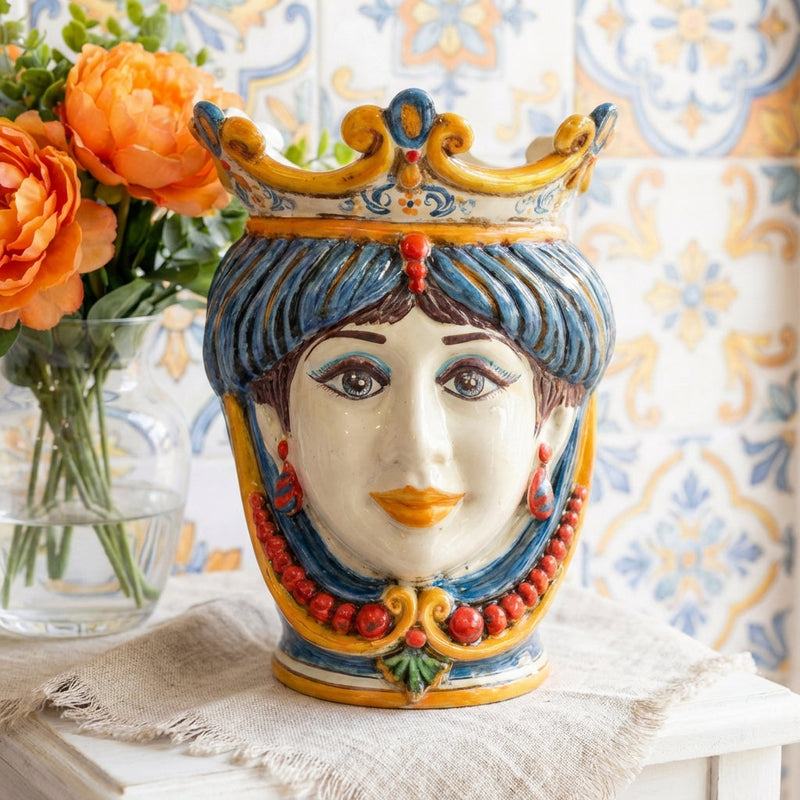
Moor's Head with Beads h 25 cm — Woman, Sicily Decor
Acquista ora
Moor's Head with Beads h 25 cm — White Male, Sicily Decor
Acquista oraThe Legend
The Story of the beautiful Sicilian maiden and the legend of the Moor's head
It is said that in Palermo, around the year 1100 (during the Moorish domination in Sicily in the Kalsa district), in the beautiful Arab quarter 'Al Hâlisah, where the sultan once resided, a beautiful maiden lived in a palace who loved to spend her days tending to the flowers and plants on her balcony.
One day, passing through Kalsa, a young Moor saw the beautiful girl, busy tending to plants, became infatuated with her, decided he wanted her for himself, and without hesitation entered the girl's house and declared his love. The maiden, touched by such strong feelings, reciprocated the young man's love, but when she learned that the Moor would leave her to return to his lands in the East, where a wife and children awaited him, she waited until nightfall and as soon as he fell asleep, she killed him, cut off his head, made it into a vase where she planted basil, and proudly displayed it on the balcony.
The Moor, thus unable to leave, would always remain with her. Meanwhile, the basil grew luxuriantly and aroused the envy of all the inhabitants of the neighborhood who, not to be outdone, had terracotta vases shaped like Moorish heads made for themselves.
Cultural and Tourist Importance
Today, the Moorish heads have become an iconic symbol of Sicily, representing not only a decorative element but also a piece of history and culture. They are highly sought after by tourists and lovers of art and craftsmanship, who see in them a tangible link to the island's history and traditions. Furthermore, their popularity has contributed to the revitalization of local craftsmanship, promoting the preservation of traditional ceramic working techniques.
Conclusion
The ceramic Moorish heads are much more than simple decorative objects: they are custodians of a millennia-old history, an expression of the rich cultural fusion that characterizes Sicily. Through their beauty and symbolism, they continue to tell stories of love, passion, and tradition, keeping the island's deep roots alive in the heart and soul of those who admire them. Their presence in Sicilian homes, gardens, and squares is a daily reminder of the strength and beauty of Sicilian art and culture, a heritage to be preserved and valued for future generations.
[[teste2]]

Leave a comment
All comments are moderated before being published.
This site is protected by hCaptcha and the hCaptcha Privacy Policy and Terms of Service apply.