


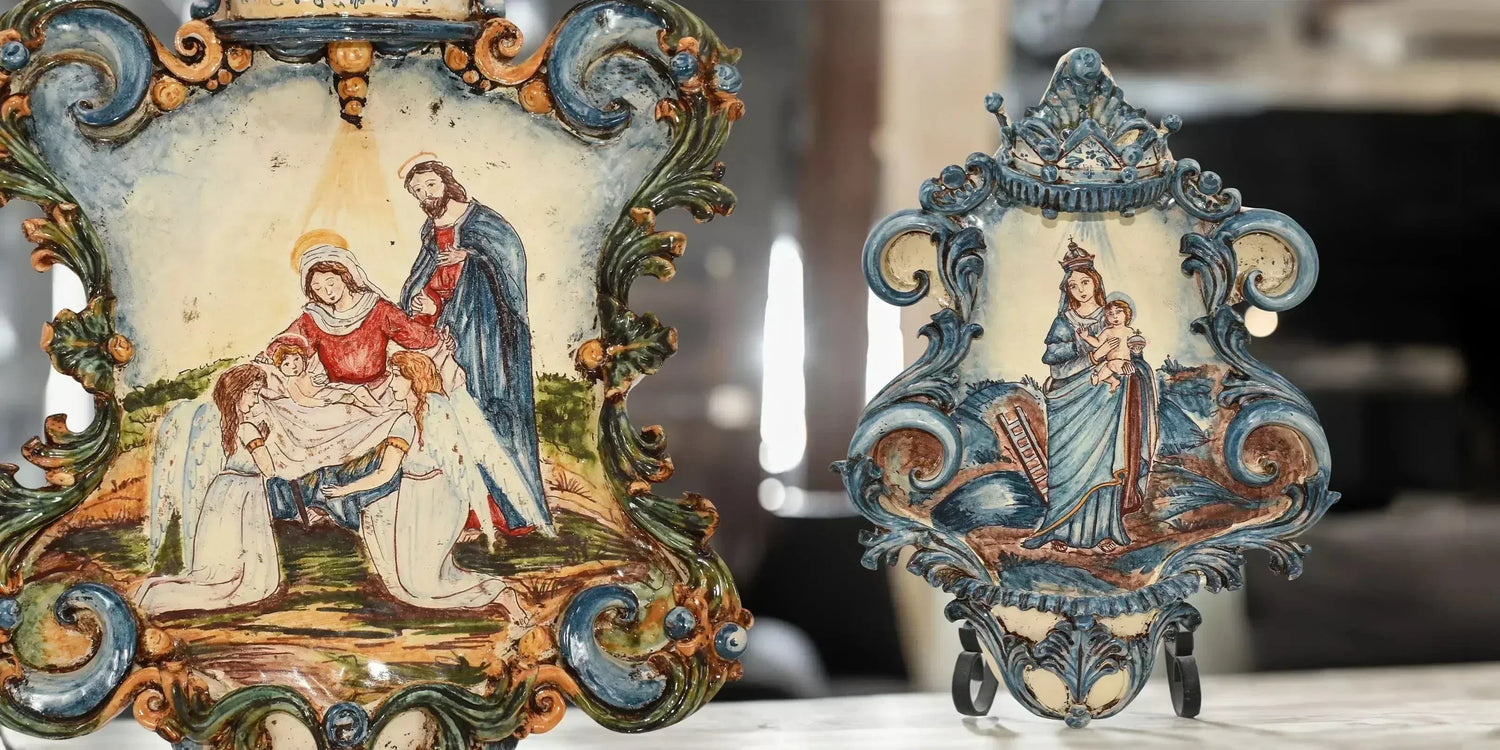
The Historical and Artistic Evolution of Sicilian Holy Water Fonts
The Sicilian ceramic holy water font is much more than a mere sacred object; it represents an authentic artistic and devotional treasure. Its history is rooted in the island's ceramic tradition, developing through centuries of artisanal mastery and profound spirituality. Each era has left its mark on these works, transforming them from liturgical instruments into true artistic expressions that narrate Sicilian culture and faith.
Origins in the Sixteenth Century
In the late sixteenth century, the first majolica holy water fonts from Caltagirone stood out for their strong religious inspiration. Artisans of this period began creating objects decorated with sacred motifs, often embellished with finely sculpted cherub heads. These details, in addition to representing symbols of divine protection, endowed the object with unparalleled aesthetic and spiritual value. Marian symbols, such as the Virgin and Child or the Annunciation, were also present, expressing the strong devotion of the Sicilian people. The decorations reflected the art of the time, with Renaissance influences that embellished each artifact.

Evolution in the Seventeenth Century
In the 17th century, Sicilian ceramic art was enriched with new elements, reflecting the cultural and religious changes of the time. Holy water fonts began to feature images of local patron saints, depicted with great attention to detail and often accompanied by iconographic symbols that enhanced their virtues. The use of relief became more refined, allowing for the creation of extraordinary beautiful three-dimensional artifacts. The colors used became more intense and vibrant, with shades ranging from cobalt blue to golden yellow, recalling the baroque influence that was spreading throughout Sicily. This artistic evolution responded to an increasingly felt need to express faith through elaborate and visually impactful works of art.
The Eighteenth Century: The Artistic Apex
The 18th century marked the peak of splendor for Sicilian holy water fonts. In this century, artisans reached an extraordinary level of mastery, combining advanced techniques with an innovative artistic vision. Holy water fonts were modeled with extreme precision, creating works that resembled miniature sculptures. Some featured sacred figures in high relief, surrounded by meticulous details that enhanced the depth and three-dimensionality of the images. Decorations varied between monochrome, with elegant shades of blue and white, and polychrome, where bright and contrasting colors contributed to creating highly impactful visual effects. This period represented the perfect synthesis between religious function and artistic aesthetics, elevating Sicilian holy water fonts to true works of art.
Contemporary Cultural Importance
Today, Sicilian ceramic holy water fonts continue to be elements of great artistic and spiritual value. Their presence in homes, churches, and museums testifies to the deep connection between Sicily and its ceramic tradition. These artifacts represent a bridge between past and present, keeping alive the cultural heritage of generations of artisans. In addition to being appreciated for their religious significance, holy water fonts are considered true collector's items, sought after for their beauty and uniqueness. Many contemporary artists draw inspiration from ancient techniques to create new interpretations of these sacred objects, demonstrating how tradition can evolve without losing its essence.

Conclusion
The Sicilian ceramic holy water font is not just a simple liturgical object, but a piece of history that encapsulates centuries of faith, art, and tradition. Its evolution through the centuries tells the story of the island's cultural and artistic changes, always maintaining a strong link with spirituality. Today, these works continue to be admired and appreciated, demonstrating the extraordinary skill of Sicilian artisans in blending beauty and devotion into a single creation. Whether for religious or decorative use, the Sicilian holy water font remains a symbol of the island's rich cultural heritage.
FAQ – Frequently Asked Questions
What is the meaning of the Sicilian ceramic holy water font?
The holy water font is a symbol of purification and spiritual protection. In Sicilian tradition, these objects combine art and faith, representing a distinctive element of the island's religious culture.
What materials are used for Sicilian holy water fonts?
Sicilian holy water fonts are made of majolica ceramic, worked and decorated by hand according to techniques passed down for centuries.
Where can I buy an authentic Sicilian holy water font?
You can find authentic holy water fonts in our online shop Ceramiche Sofia, where we offer unique handmade pieces.
What are the most common decorative styles in Sicilian holy water fonts?
The most common styles include decorations with cherubs, images of saints, Marian symbols, and baroque floral motifs.
Are Sicilian holy water fonts used only for religious purposes?
In addition to liturgical use, many people choose to use holy water fonts as decorative objects, appreciating their high artistic value and their ability to enrich any environment.

Leave a comment
All comments are moderated before being published.
This site is protected by hCaptcha and the hCaptcha Privacy Policy and Terms of Service apply.